
Ecommerce Accounting Software
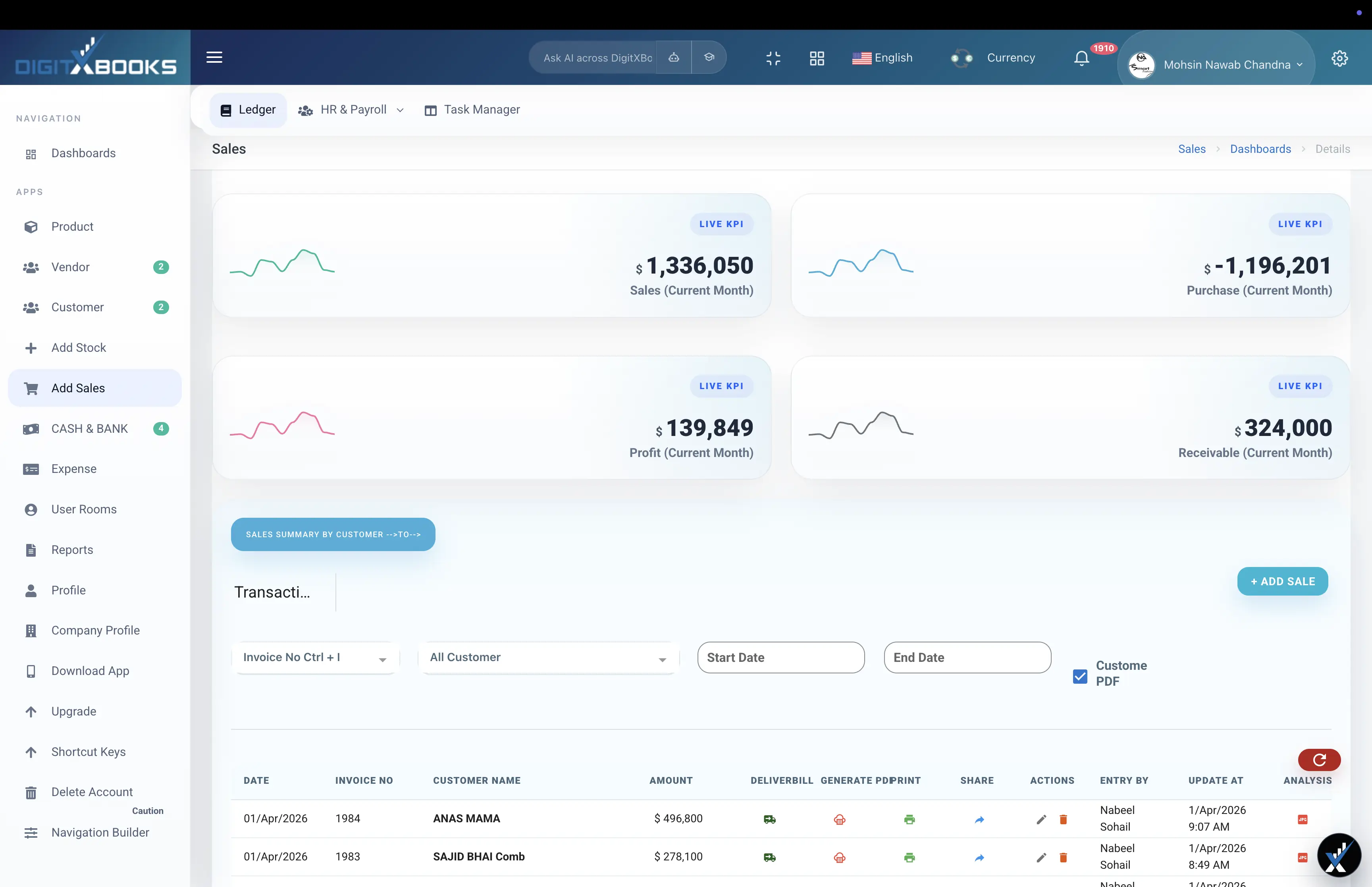
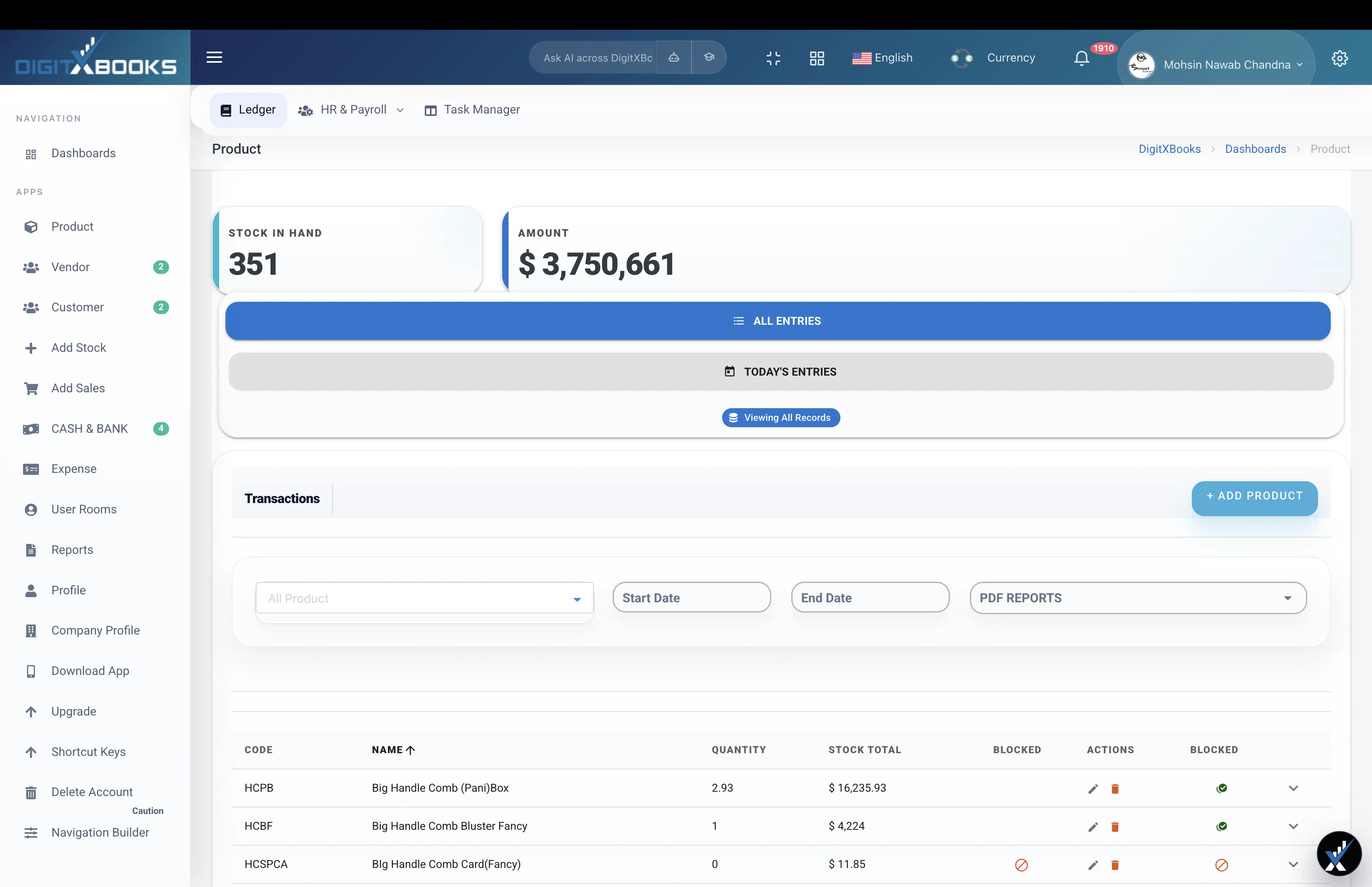
Online sellers usually know their revenue and rarely know their profit. Platform fees, shipping, payment charges and a high return rate sit between the two, and none of them show up in a marketplace dashboard. DigitXBooks records cost, price and returns per product so the number you are looking at is contribution, not gross sales.
Orders, returns, fees and real per-order profit
A twenty per cent return rate destroys a thin margin, and informal handling hides it. DigitXBooks records sales returns and stock returns as proper entries affecting stock, customer balance and profit, so return-heavy products are identifiable rather than a vague suspicion.
- Sales returns and stock returns with stock and balance impact
- Return patterns visible per product
- Product debit and credit adjustments for damaged stock
- Quantity and return reporting per product
Every cost in the right place
Marketplace commission, payment gateway charges, shipping, packaging and advertising each have to land in a category before margin means anything. Expense tracking with categories, recurring entries and payment-method detail keeps them out of one undifferentiated bucket.
- Expense categories for fees, shipping, packaging and advertising
- Cash, bank and mobile-wallet payment tracking
- Recurring expense entries for subscriptions and retainers
- Expense reporting against revenue for real contribution margin
Stock across channels
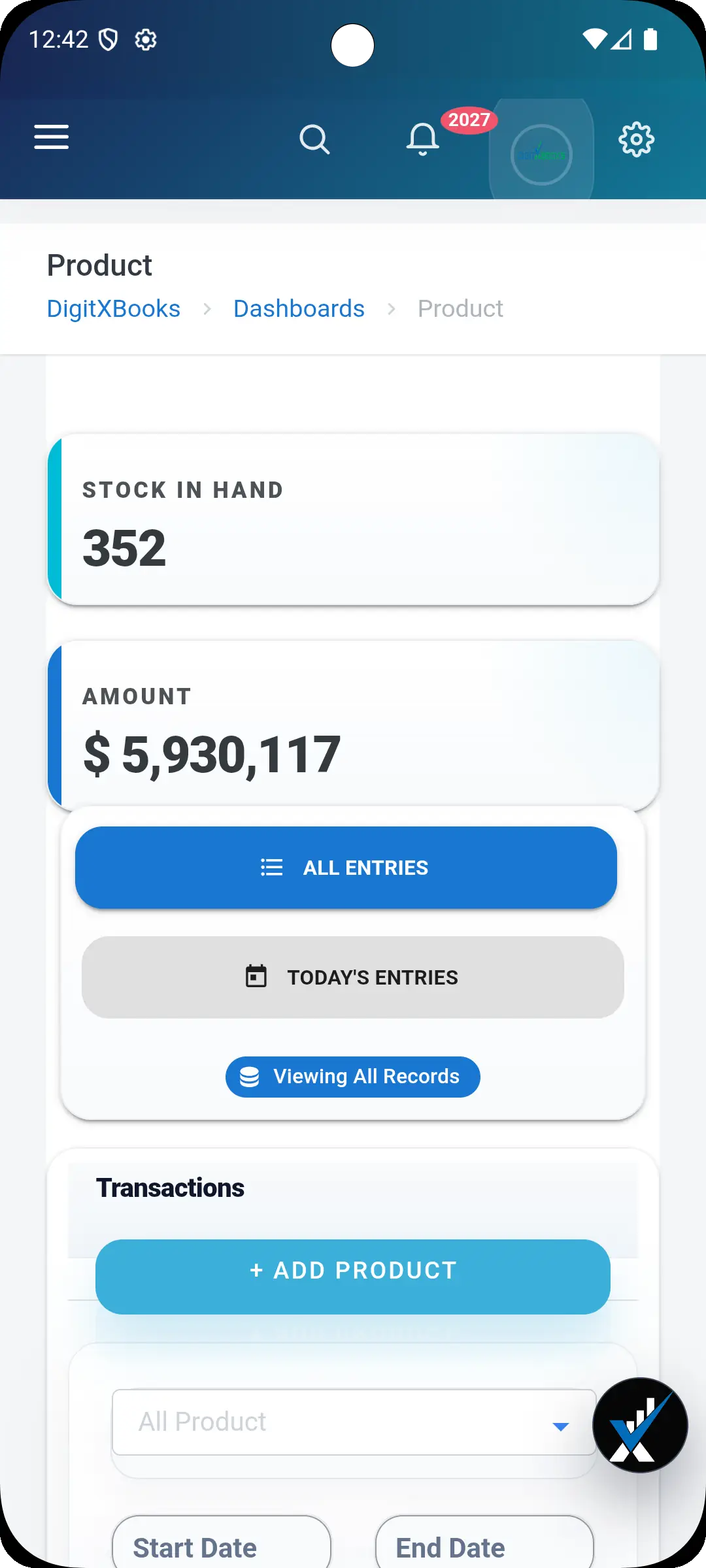
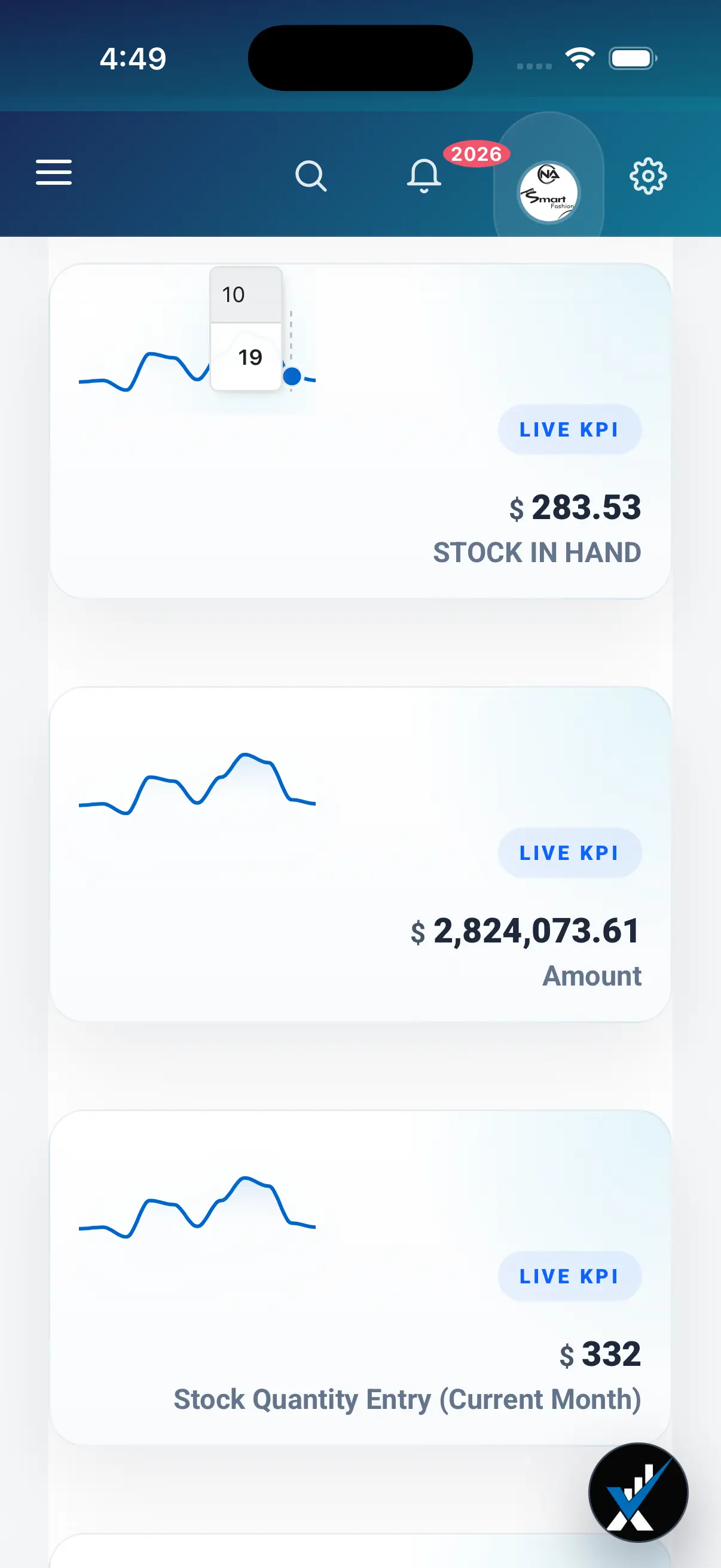
Selling the same stock on several channels turns overselling into a customer-service problem. A single product catalogue with movement history gives one authoritative stock position, and AI insights surface aging and slow-moving lines before they become dead capital.
- One product catalogue as the authoritative stock position
- Stock addition, return and adjustment history
- AI aging insights for slow-moving inventory
- Android and iOS access for warehouse and owner checks
FAQs
Can DigitXBooks track per-product profit for online sales?
Yes. Cost and selling price are recorded on each product line, so profit is calculated per line rather than estimated at month end. Combined with categorised expenses for fees and shipping, that gives real contribution margin per product.
How are ecommerce returns handled?
Sales returns and stock returns are proper entries that adjust stock, the customer balance and profit. Because they are recorded rather than netted off informally, return-heavy products become visible in reporting.
Does it connect directly to marketplaces?
There is no direct marketplace connector today. Orders and product data come in through CSV import, and most sellers reconcile per settlement period, which also happens to be when platform fees become known.
Can I track platform fees and shipping separately?
Yes. Expense categories let you separate marketplace commission, payment gateway charges, shipping, packaging and advertising, which is the only way contribution margin means anything.