
Xero Alternative
Xero is a clean, bank-reconciliation-led cloud ledger with a strong advisor network, and businesses whose day is mostly categorising bank feeds tend to like it. DigitXBooks approaches the same job from the operations side: it starts from the products you buy and sell, and lets the ledger fall out of those movements. If your margin lives in stock rather than in bank categorisation, that difference in starting point matters more than any feature checklist.
For teams that want stock, payroll and outreach in the same place
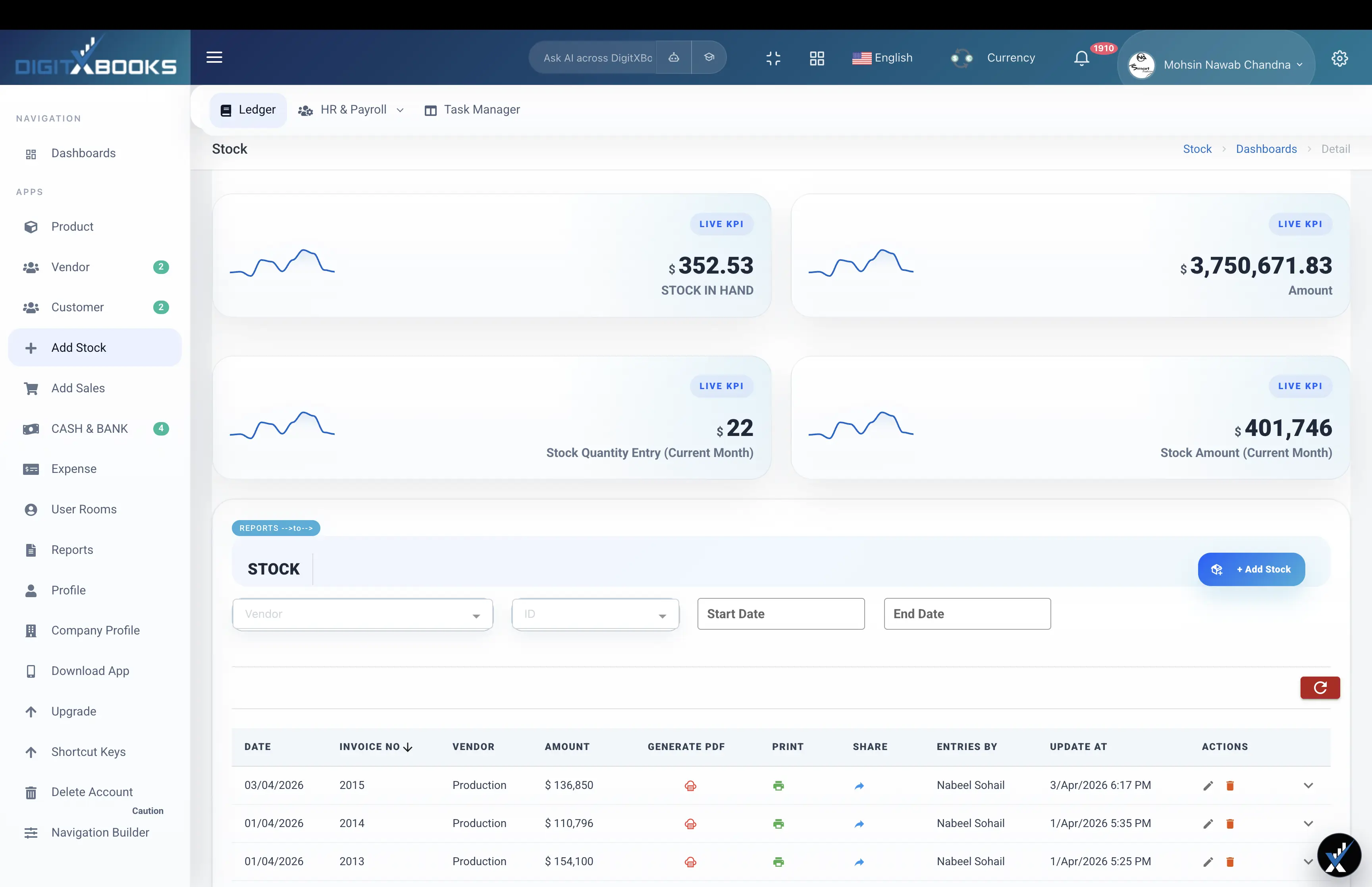
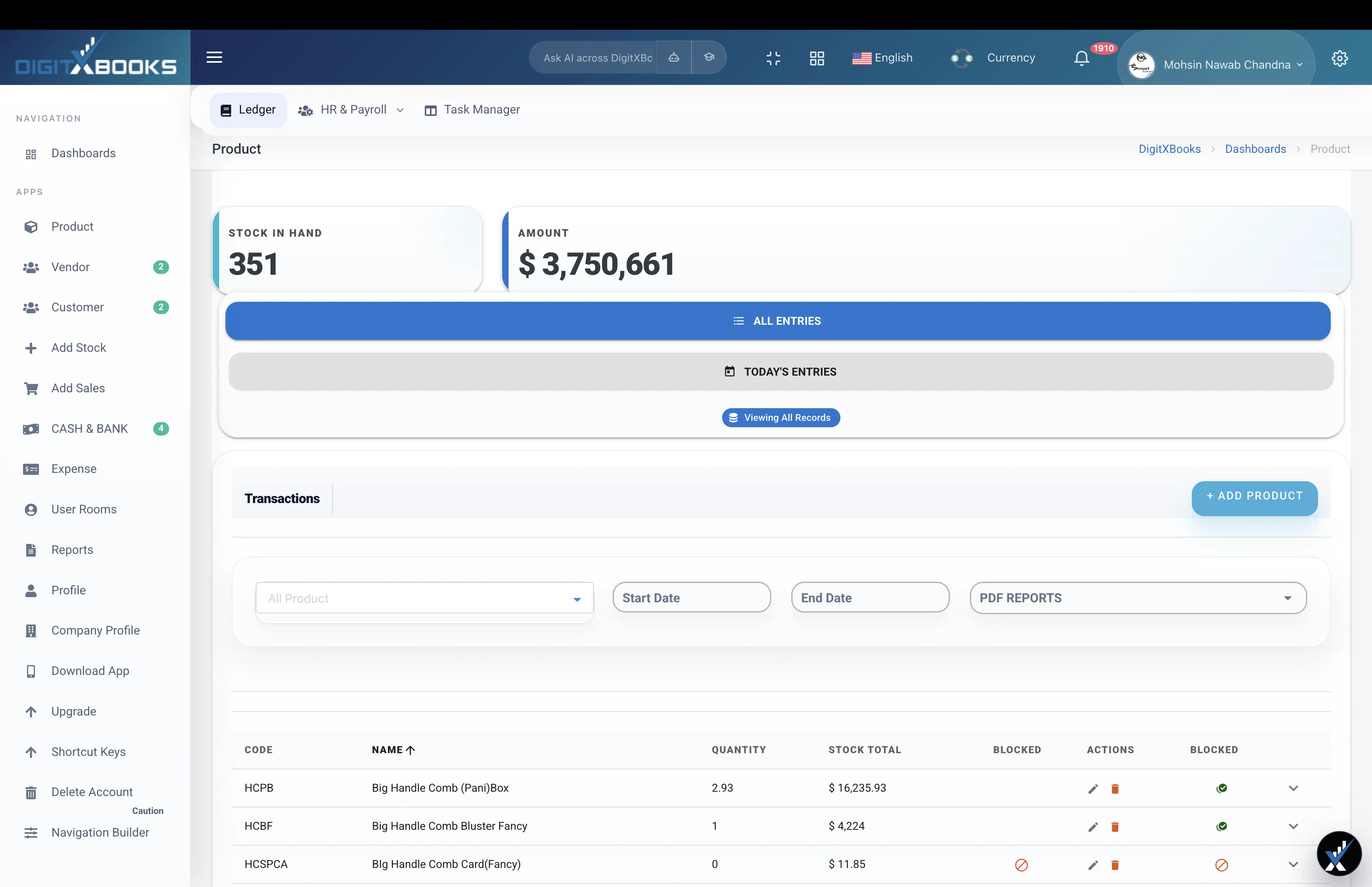
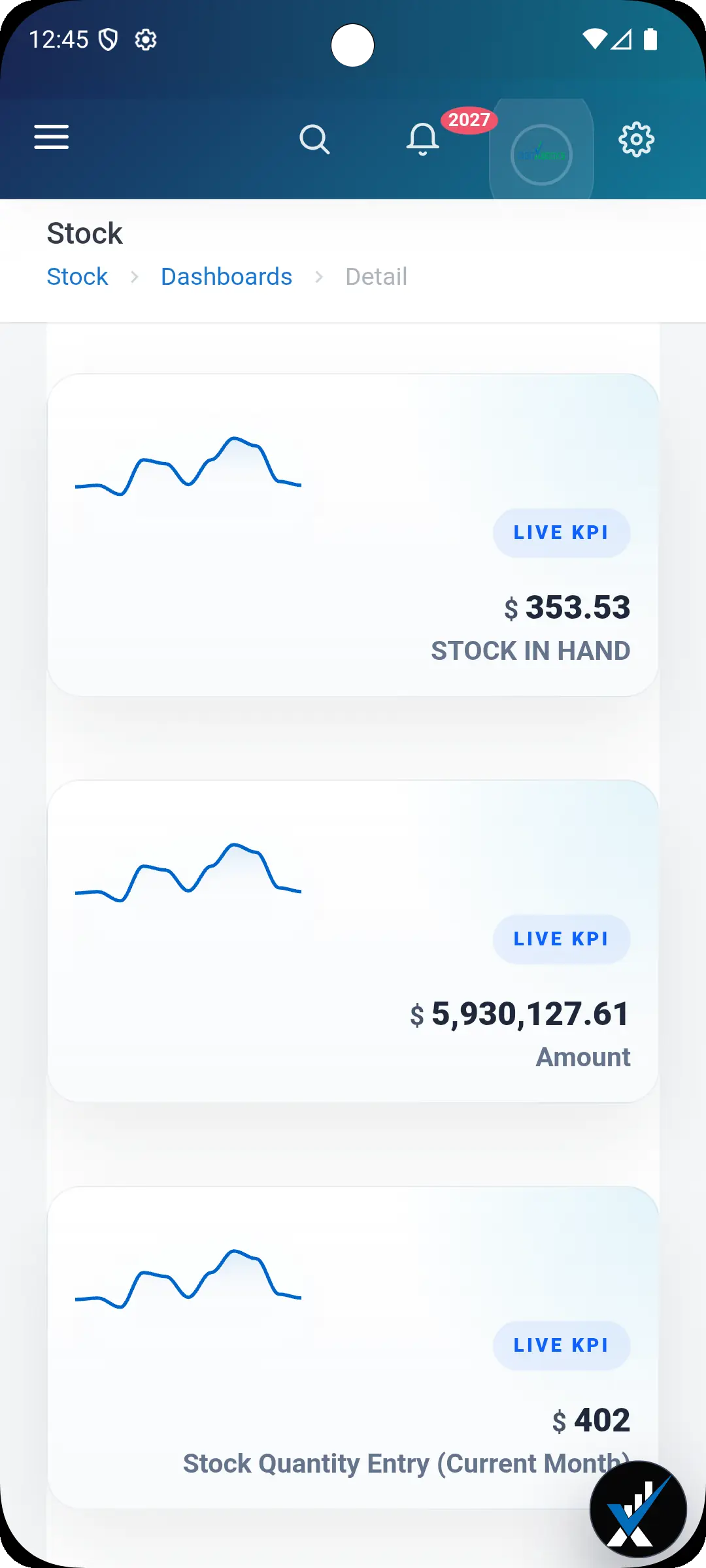
Bank-feed reconciliation is a good way to keep a service business tidy, but it tells you very little about which products make money. DigitXBooks records cost, selling price and profit at the transaction row, so product-level margin, slow-moving stock and return patterns are visible without exporting anything. For a retailer, wholesaler or distributor that is usually the report that changes decisions.
- Cost, selling price and profit columns on sales and purchase rows
- Product stock, sales, purchase, return and quantity reports
- Product debit and credit movement history for investigating discrepancies
One workspace instead of an app stack
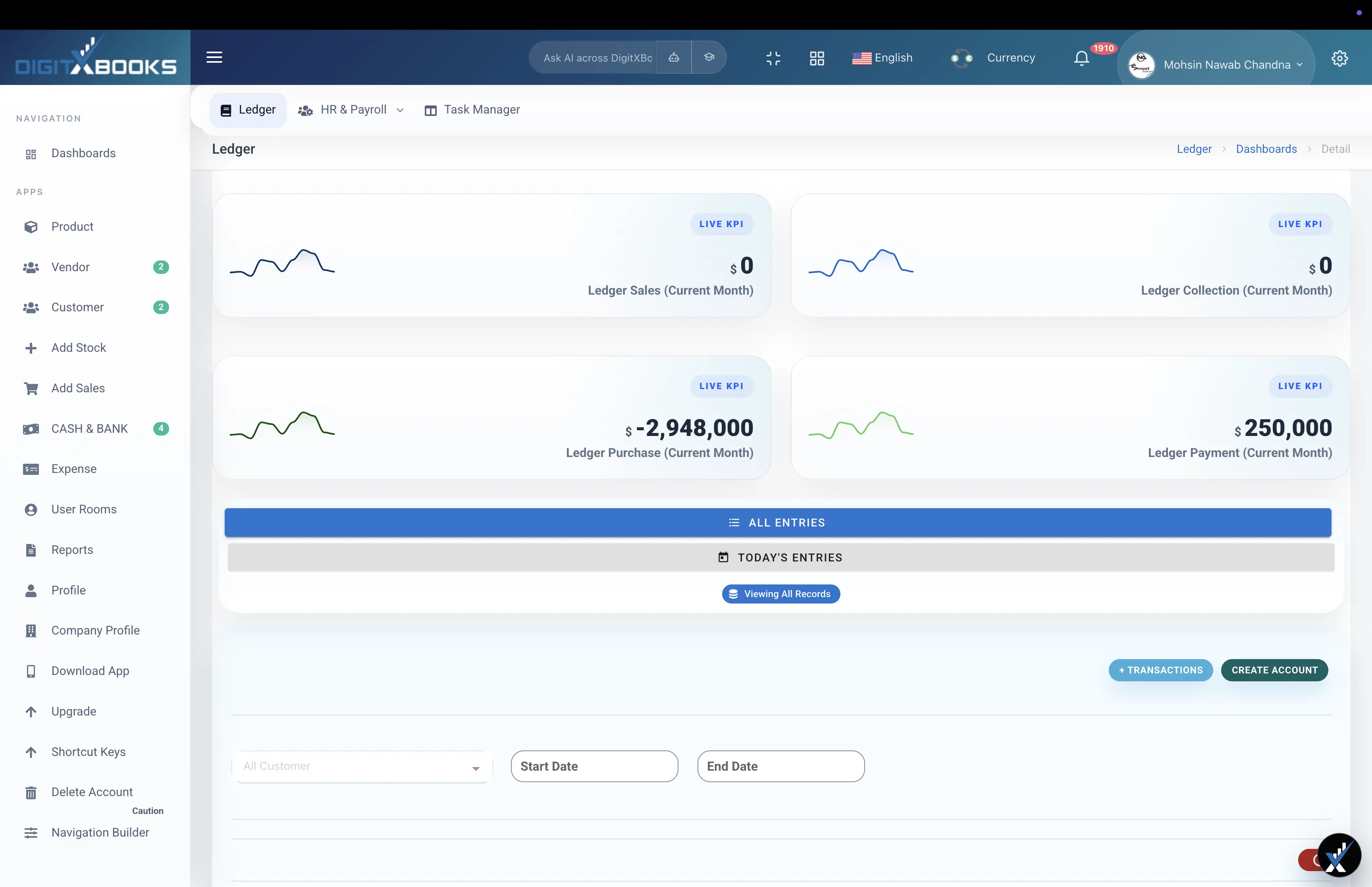
Xero's marketplace is genuinely large, and assembling a best-of-breed stack around it is a legitimate strategy. It also means more subscriptions, more sync failures and more places to reconcile the same number. DigitXBooks holds inventory, purchasing, payroll records, tasks, support conversations and outreach in one dataset, which removes the integration layer entirely.
- No sync layer between accounting, stock and payroll records
- Role-based access so staff, accountants and owners share one source of truth
- AI email marketing and B2B prospecting included rather than integrated
Where Xero keeps the edge
Xero's bank-feed coverage, its certified advisor network and its marketplace breadth are all ahead of a newer product, and pretending otherwise would not help you decide. If automatic bank feeds for your specific bank are the single most important thing, or your accountant is Xero-certified and bills less because of it, staying put is a defensible choice.
- Broader automatic bank-feed coverage in several markets
- Large certified advisor network
- Very wide third-party marketplace
DigitXBooks vs Xero: how the two are packaged
| Capability | DigitXBooks | Xero |
|---|---|---|
| General ledger and reporting | Included | Included |
| Product-level cost and margin tracking | Core to the data model | Generally needs an inventory add-on |
| Purchase orders and stock returns | Included | Varies by plan or add-on |
| Payroll records | Included in the core product | Region-dependent, often separately priced |
| Automatic bank feeds | Manual and statement-led entry | Broad automatic coverage |
| AI analysis of your own data | Included | Limited |
| AI outreach and prospecting | Included | Not part of the product |
| Interface languages | 6 (EN, ES, AR, FR, DE, ZH) | Fewer, region-dependent |
| Advisor network size | Growing | Large and certified |
If your books are mostly bank transactions and your accountant is Xero-certified, Xero is hard to beat. If your business buys and sells physical products, and you want stock, payroll and customer acquisition in the same subscription as the ledger, DigitXBooks is the better structural fit.
Competitor capabilities are summarised from their public product documentation and change frequently. Always confirm current details on the vendor's own site before deciding. The comparison below focuses on how each product is packaged rather than on pricing.
FAQs
Why would I switch from Xero to DigitXBooks?
The usual reason is inventory. If you sell physical products, the stock, purchase-order and margin reporting you need is part of the core DigitXBooks product rather than an add-on, and the same subscription also covers payroll records and customer outreach. Teams running Xero plus an inventory app plus a marketing tool are the clearest fit.
Does DigitXBooks support automatic bank feeds like Xero?
This is the honest gap. Xero's automatic bank-feed coverage is broader. DigitXBooks is built around statement-led and manual entry with full cash, bank and mobile-wallet account tracking plus complete transaction summaries, which suits businesses that reconcile periodically rather than daily.
Is DigitXBooks cheaper than Xero?
Rather than quote figures that go stale, the fair way to compare is total stack cost. Add up what you currently pay for the ledger plus any inventory, payroll and email-marketing subscriptions around it, then compare that total against a single DigitXBooks subscription that includes those modules.
Can my accountant work in DigitXBooks?
Yes. Role-based access and page-level permissions let you give an external accountant their own login scoped to the ledger, reports and reconciliation views without exposing payroll or outreach. Reports export as PDF for anyone who prefers working outside the system.