
Zoho Books Alternative
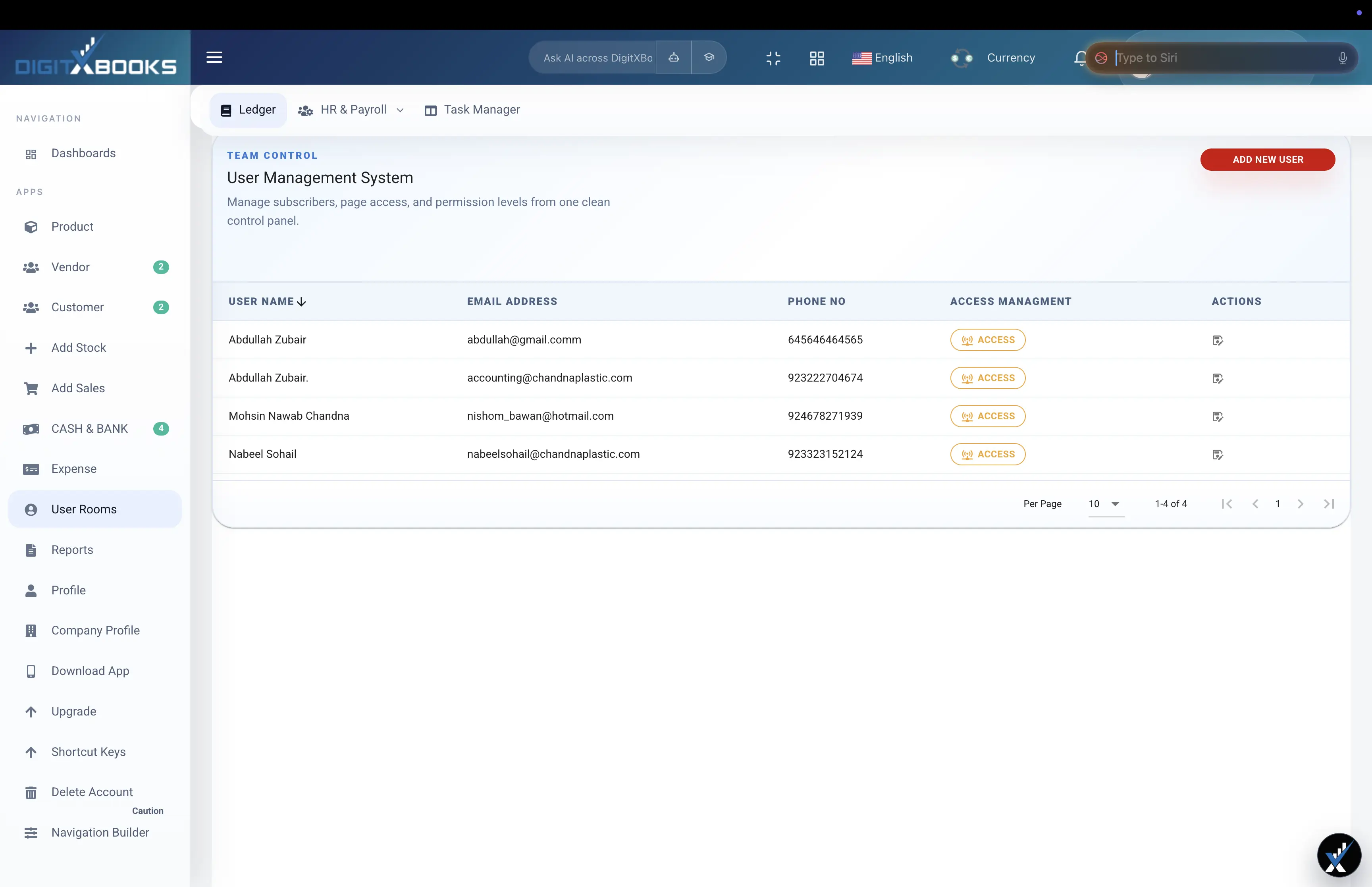
Zoho Books is a capable ledger, and its real strength is the surrounding suite: CRM, Inventory, Campaigns, People and the rest. That is also the trade-off. Getting accounting, stock, payroll and outreach working together usually means licensing several Zoho products and wiring them to each other. DigitXBooks ships those capabilities as one product with one dataset, which is a simpler thing to buy, learn and maintain.
One product instead of a suite you assemble
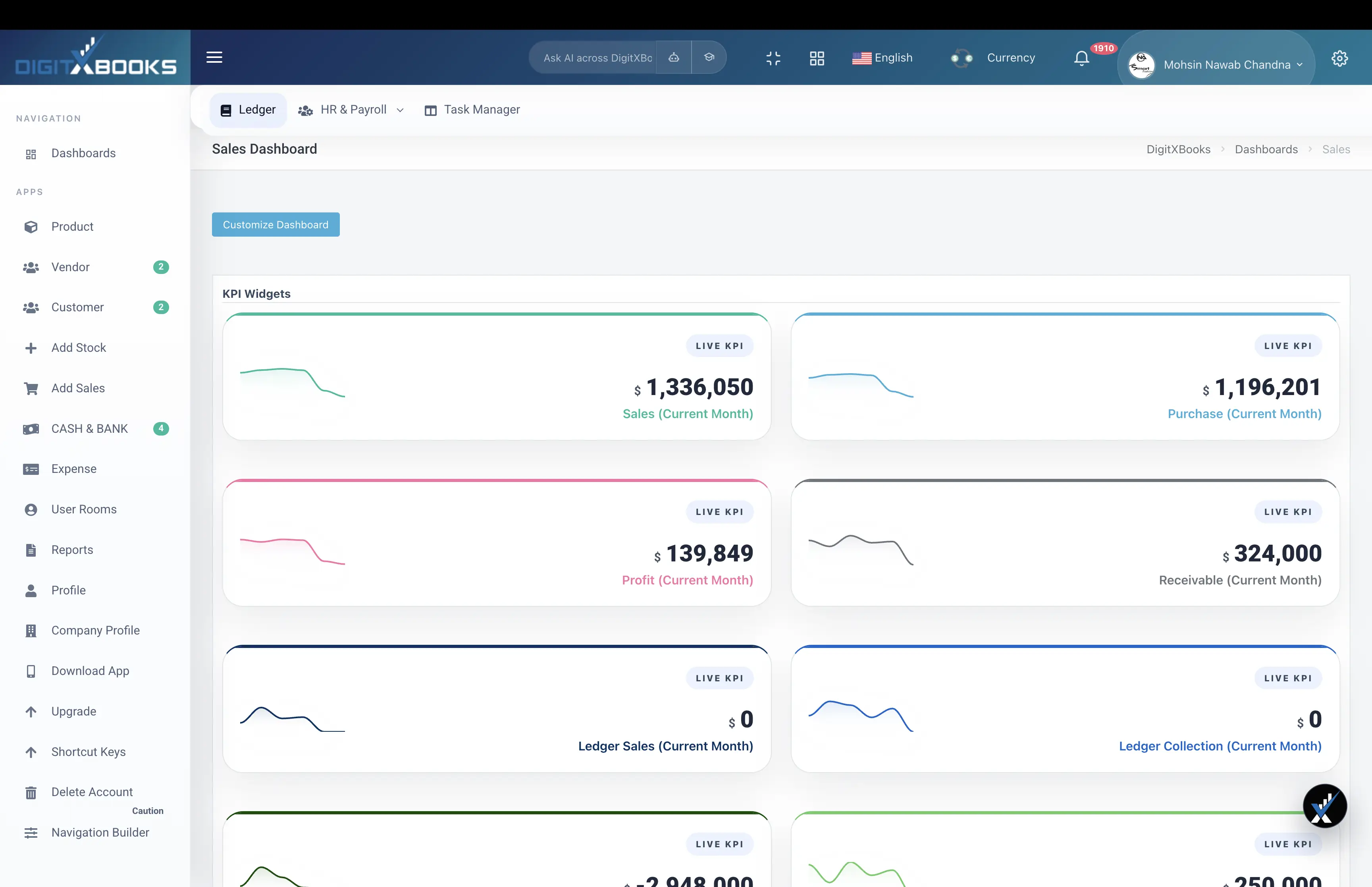
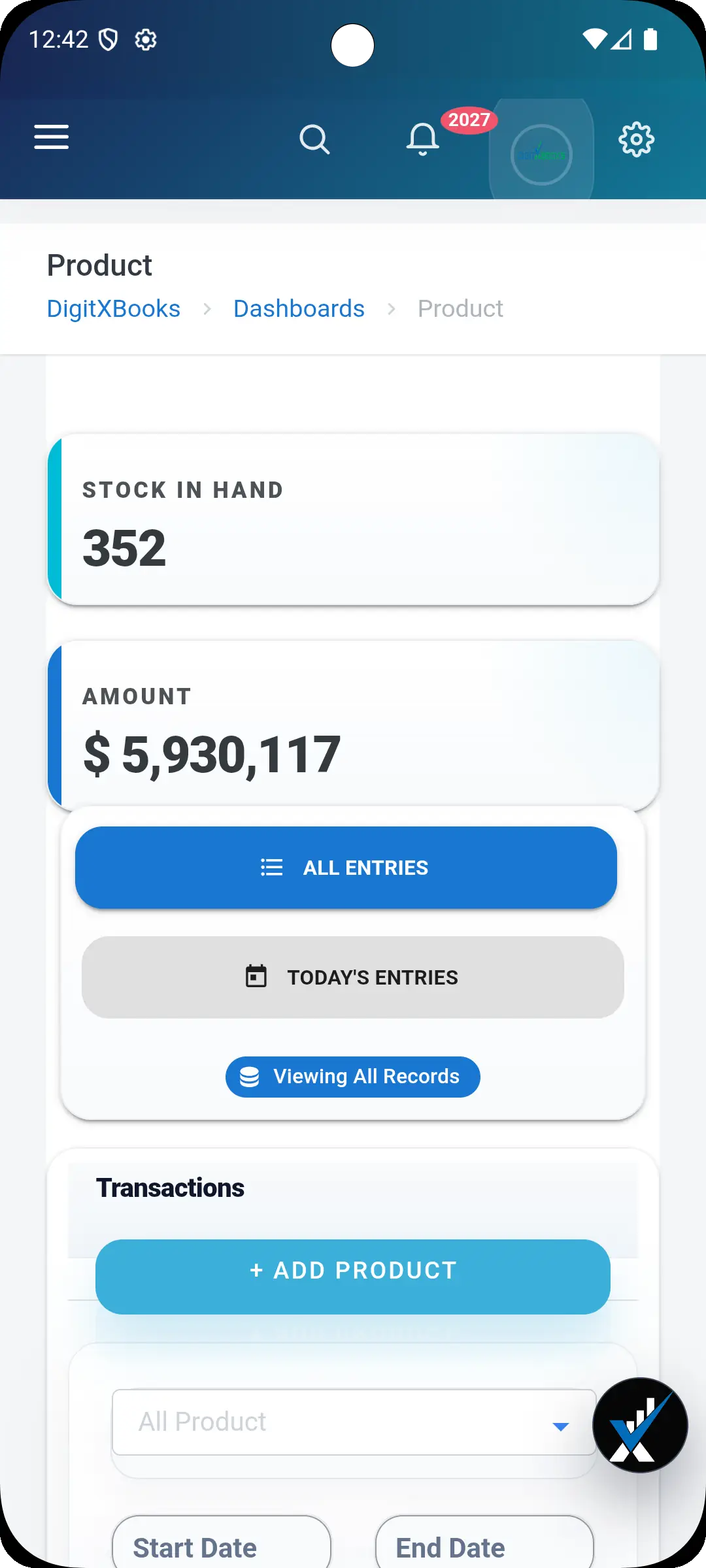
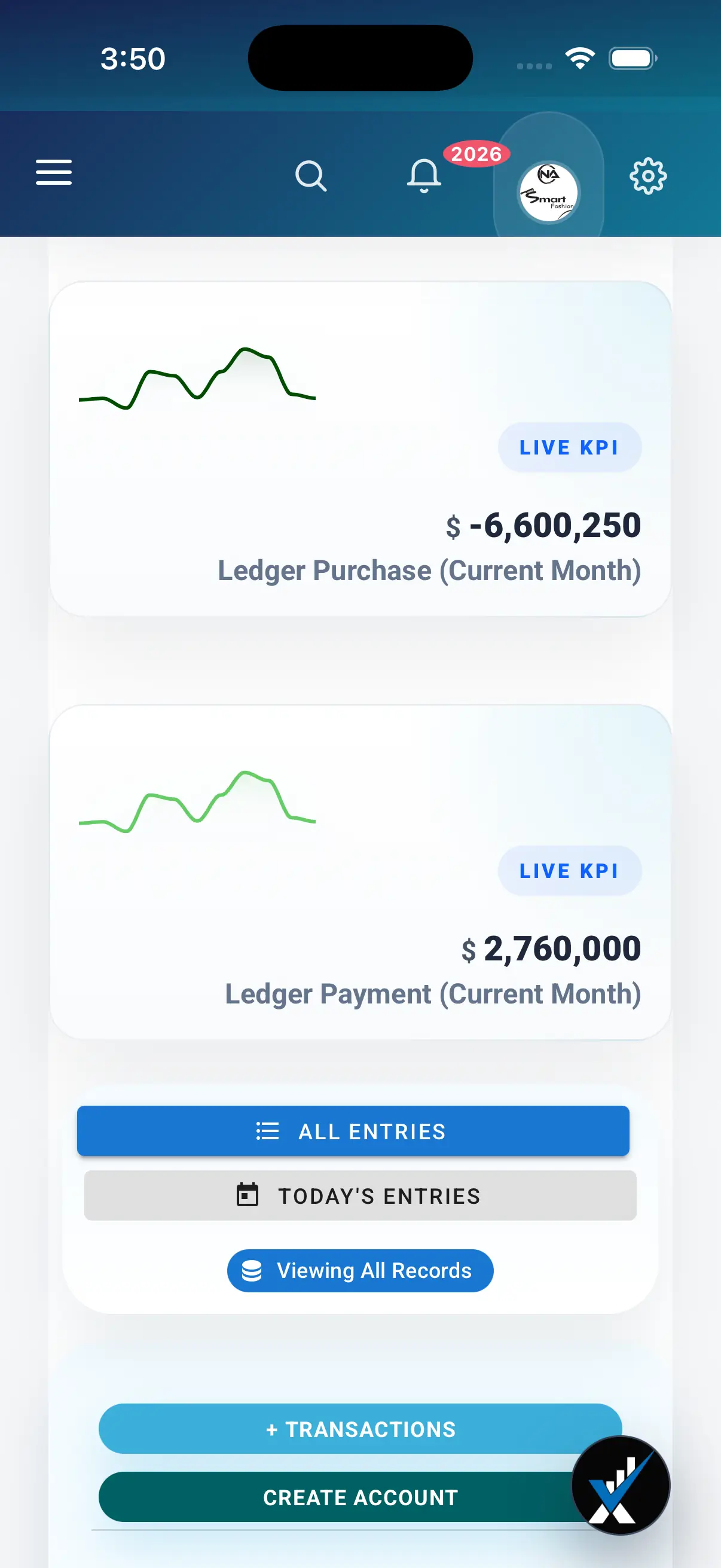
Suites are excellent when you genuinely need every component and have someone to administer them. For a twenty-person business, the reality is often several subscriptions, several admin consoles, and records that exist in two places with slightly different values. DigitXBooks removes that class of problem by not having module boundaries in the first place: customers, products, invoices, stock, payroll and outreach all read from the same tables.
- No per-module licensing decisions or seat juggling
- Customer and product records exist once, not once per app
- One permission model across accounting, payroll, tasks and outreach
Outreach that knows your ledger
This is the sharpest difference. DigitXBooks includes an AI email-marketing workspace and an AI B2B prospecting engine in the same product as the books. Campaigns are built from a short offer brief, CSV lead batches are imported and previewed against real lead data, and prospecting surfaces companies with genuine buying signals rather than a scraped list. Sender domains, replies, STOP handling and suppressions are handled in the same place.
- AI campaign creation from one short offer brief
- Lead-aware subject lines and body copy from imported CSV detail
- Verified sender domains, reply attribution, suppressions and unsubscribe handling
Where Zoho wins
If you already run Zoho CRM and Zoho Desk and your team lives in them, adding Zoho Books keeps everything under one vendor and one login, and that coherence has real value. Zoho's breadth of country-specific tax editions is also wider. Those are good reasons to stay.
- Coherent if you already standardised on the Zoho suite
- Wider set of country-specific tax editions
- Very broad feature surface across the whole suite
DigitXBooks vs Zoho Books: how the two are packaged
| Capability | DigitXBooks | Zoho Books |
|---|---|---|
| Accounting and ledgers | Included | Included |
| Inventory and stock control | Same product | Usually Zoho Inventory, licensed separately |
| Payroll records | Same product | Usually Zoho Payroll, region-dependent |
| Email marketing campaigns | Same product | Usually Zoho Campaigns, licensed separately |
| AI B2B lead prospecting | Same product | Not a standard suite component |
| Cross-module data syncing | Not needed | Required between apps |
| Number of subscriptions to manage | One | One per app |
| Interface languages on the website | 6 (EN, ES, AR, FR, DE, ZH) | Varies by app |
| Country-specific tax editions | Generic, configurable | Wide range |
Already standardised on Zoho? Zoho Books is the path of least resistance. Want accounting, stock, payroll and lead generation from one product with one bill and no sync layer? That is the case for DigitXBooks.
Competitor capabilities are summarised from their public product documentation and change frequently. Always confirm current details on the vendor's own site before deciding. The comparison below focuses on how each product is packaged rather than on pricing.
FAQs
How is DigitXBooks different from Zoho Books?
Packaging. Zoho Books is the accounting component of a suite, so inventory, payroll and email campaigns are typically separate Zoho products you license and connect. DigitXBooks delivers those as one product over one dataset, and adds AI B2B prospecting, which has no direct suite equivalent.
Do I need extra subscriptions for inventory or email marketing?
No. Stock control, purchase orders, payroll records, AI email marketing and AI prospecting are part of the DigitXBooks product. That single-subscription structure is the main reason teams compare it against a multi-app suite.
Does DigitXBooks support multiple languages like Zoho?
Yes. The website and product interface cover English, Spanish, Arabic, French, German and Chinese, including right-to-left layout for Arabic, so distributed teams can each work in their own language against the same records.
Can I import my Zoho Books data?
Yes, through CSV. Bring across products, customers and vendors, then set opening balances for receivables, payables, cash and bank. Running both systems in parallel for one full cycle before cutting over is the lowest-risk sequence.