
QuickBooks Alternative
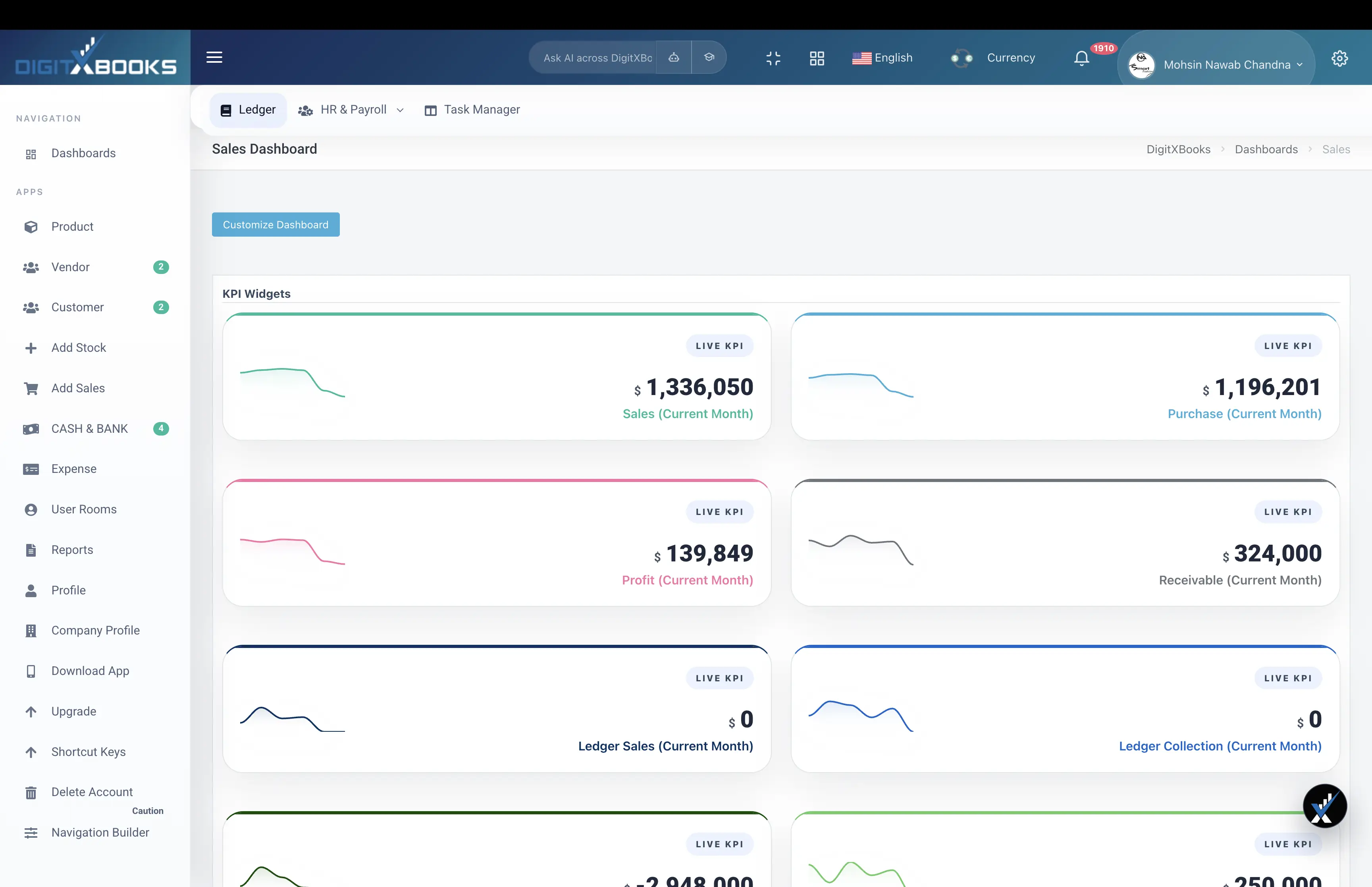
QuickBooks is a mature, widely supported general ledger, and for businesses whose accountant works in it every day that familiarity is worth a lot. DigitXBooks is built for a different shape of company: one where the person entering invoices is also chasing receivables, watching stock, running payroll and prospecting for the next customer. Everything that workflow needs sits inside one workspace instead of being split across a ledger, an inventory add-on and a separate outreach tool.
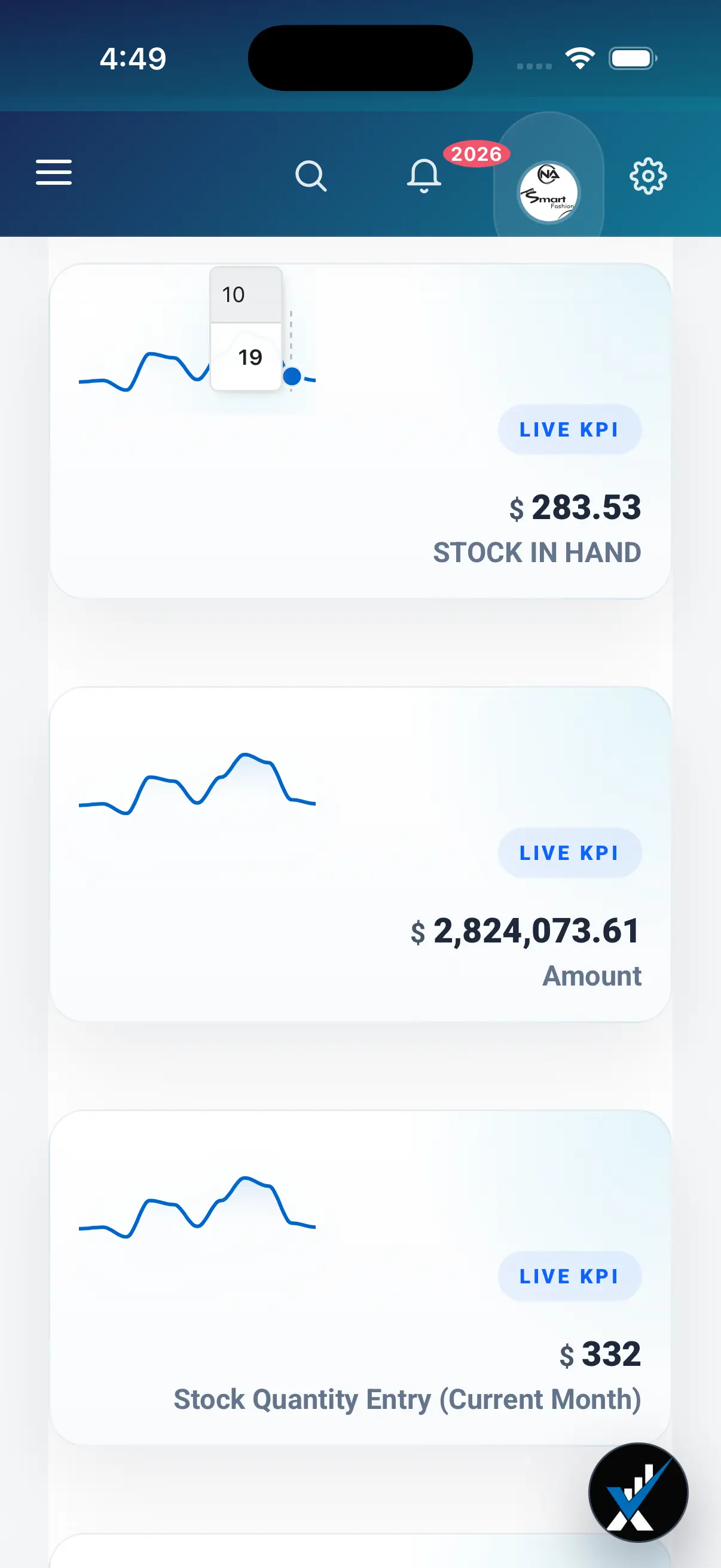
Accounting, inventory, payroll and outreach in one subscription
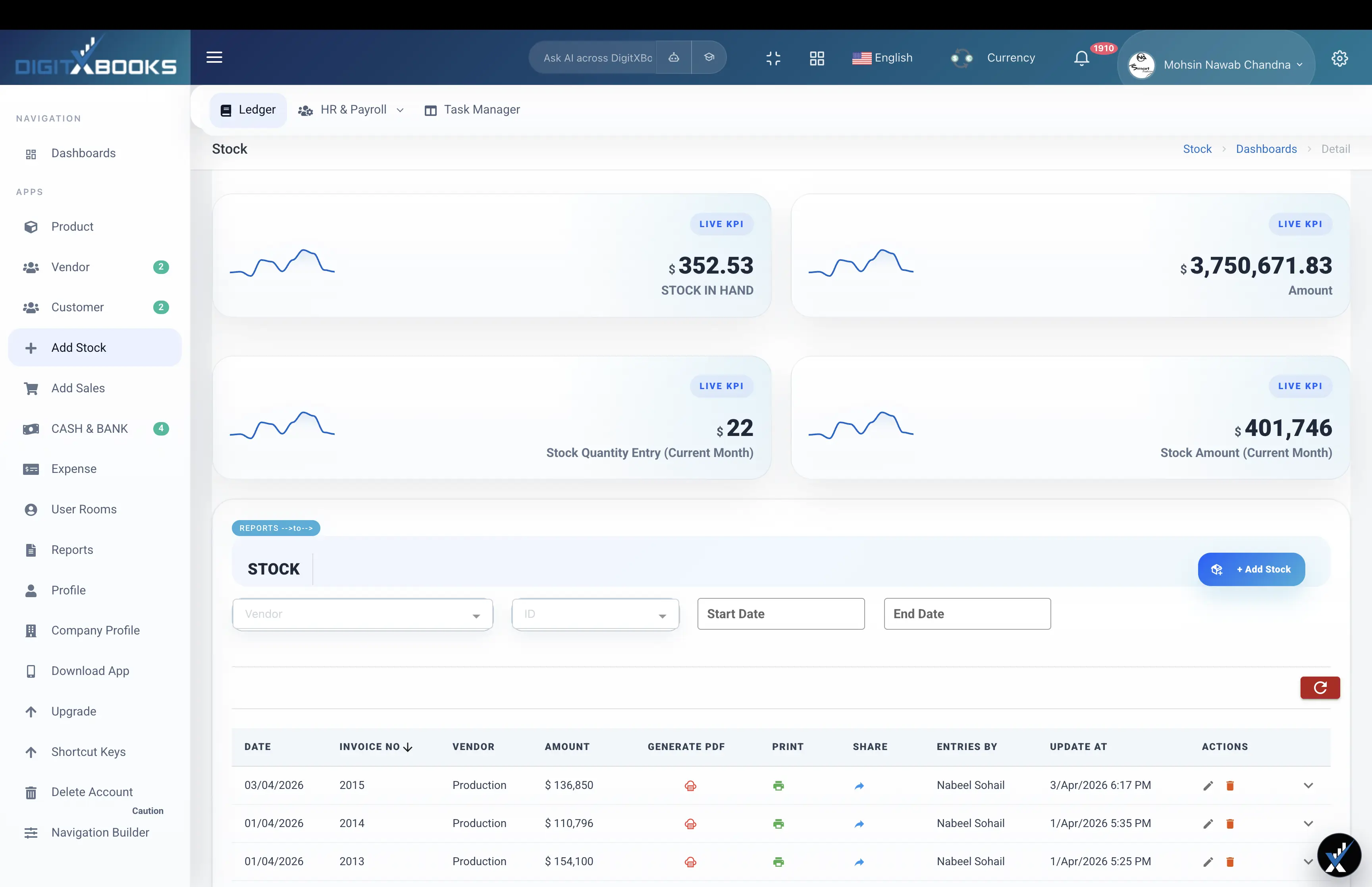
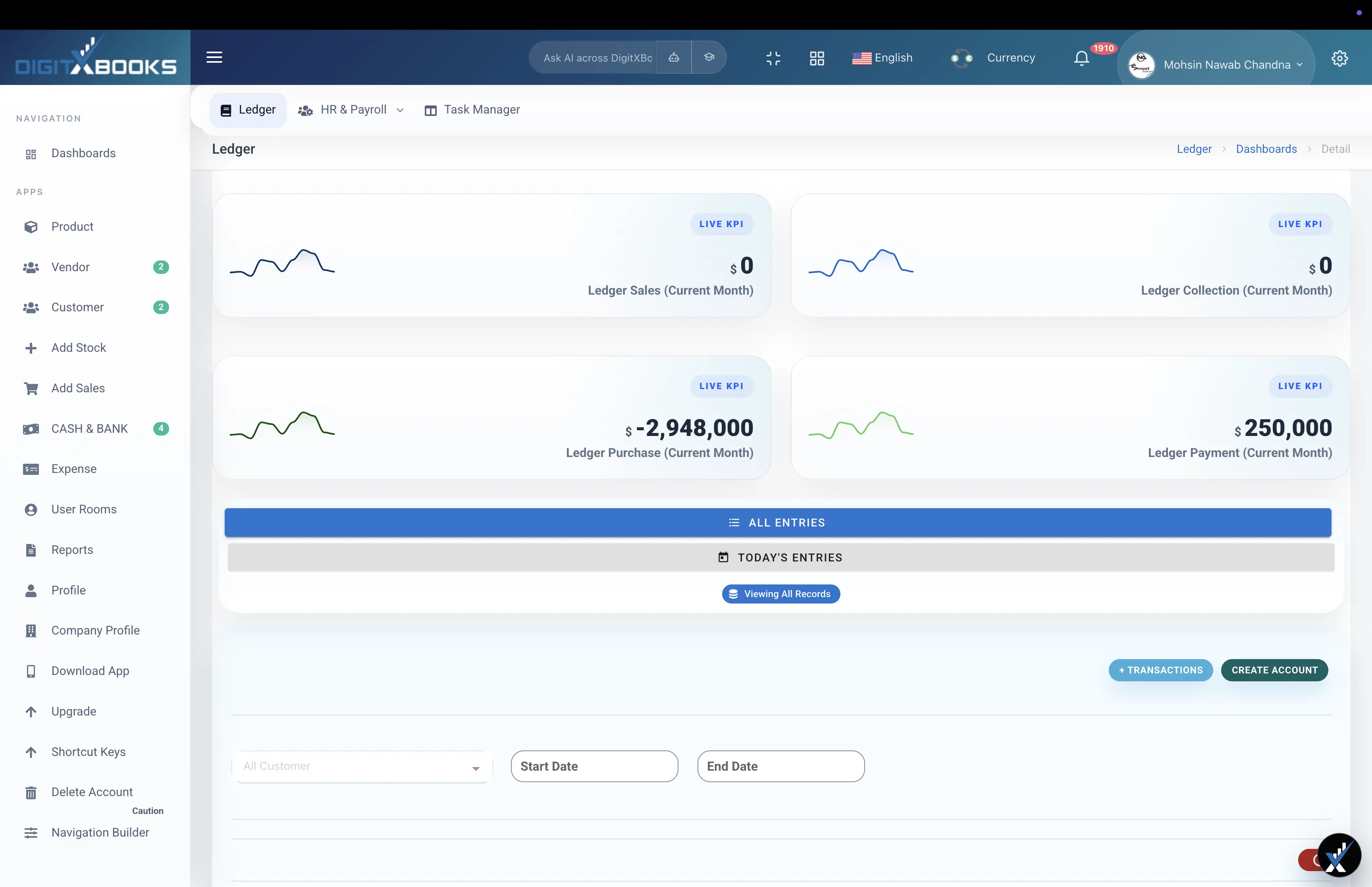
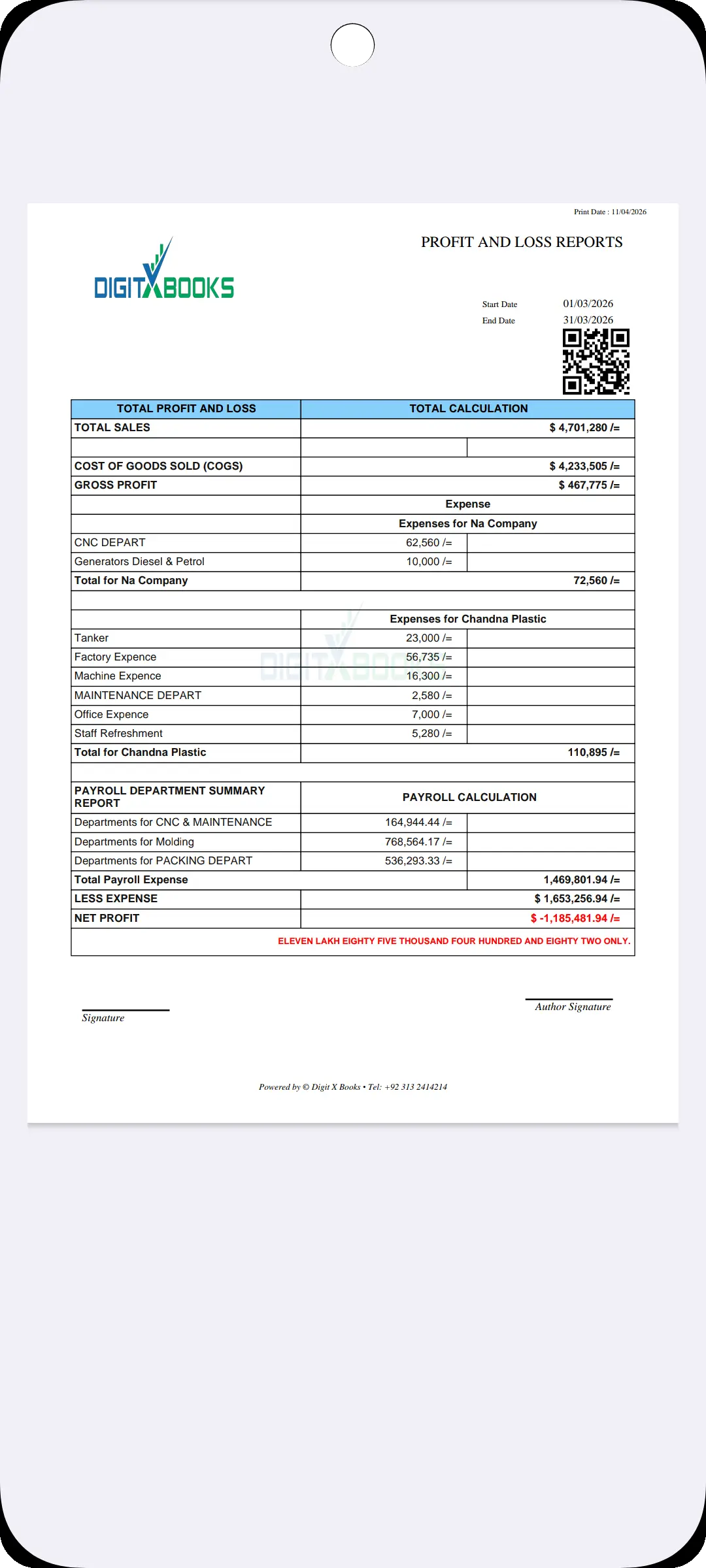
The common frustration with a traditional ledger-first product is the add-on trail. Stock control, advanced reporting, payroll and marketing each tend to arrive as a separate line item or a third-party integration, and every integration is one more place data can drift. DigitXBooks was designed as a single dataset: a sale moves stock, updates the customer's receivable balance, hits the cash or bank account, and shows up in the profit report without a sync step.
- Inventory, batch and stock-return handling included rather than bolted on
- Receivable and payable aging in 0-30, 31-60, 61-90 and 90+ day buckets out of the box
- AI insights that read your own ledger data for summaries, audit flags and what-if analysis
- Task board and customer support inbox for the follow-up work that surrounds the books
Where QuickBooks still makes sense
An honest comparison has to include this. QuickBooks has a very large accountant and bookkeeper community, a long list of certified advisors, and one of the deepest third-party app marketplaces in the category. If your external accountant insists on working inside QuickBooks, or you depend on a niche integration that only exists there, that ecosystem advantage is real and switching for its own sake is rarely worth it.
- Larger pool of accountants already trained on the product
- Deeper marketplace of country-specific tax and payroll integrations
- Longer track record with lenders and auditors in some markets
Moving your books across
Migration is the part most teams worry about, and the honest answer is that it is a data project, not a button. DigitXBooks imports the records that actually matter for continuity: your product catalogue, customers and vendors with their opening balances, and your outstanding invoices and bills. Historic closed transactions are usually better left archived in the old system, which keeps the new ledger clean and shortens the changeover considerably.
- Import products, customers and vendors from CSV
- Enter opening balances for receivables, payables, cash and bank accounts
- Run both systems in parallel for one cycle before cutting over
DigitXBooks vs QuickBooks: how the two are packaged
| Capability | DigitXBooks | QuickBooks |
|---|---|---|
| Core double-entry bookkeeping | Included | Included |
| Inventory and stock movement | Included in the core product | Typically tied to higher tiers or an add-on |
| Purchase orders and vendor payables | Included | Varies by plan tier |
| HR and payroll records | Included in the core product | Usually a separately priced payroll service |
| AI email marketing campaigns | Included | Not part of the accounting product |
| AI B2B lead prospecting | Included | Not part of the accounting product |
| AI analysis of your own ledger data | Included | Limited; largely report-driven |
| Interface languages | 6 (EN, ES, AR, FR, DE, ZH) | Varies by regional edition |
| Native Android and iOS apps | Included | Included |
| Third-party app marketplace | Focused integration set | Very large marketplace |
| Accountant familiarity | Growing | Extremely widespread |
Choose QuickBooks if your accountant's workflow and a specific integration are non-negotiable. Choose DigitXBooks if you would rather run books, stock, payroll and customer acquisition from one workspace, in your team's own language, without assembling three subscriptions to do it.
Competitor capabilities are summarised from their public product documentation and change frequently. Always confirm current details on the vendor's own site before deciding. The comparison below focuses on how each product is packaged rather than on pricing.
FAQs
Is DigitXBooks a good QuickBooks alternative for a small business?
It is a strong fit if your business touches inventory, purchase orders or payroll alongside plain bookkeeping, because those modules are part of the core product rather than paid add-ons. It is a weaker fit if your external accountant will only work inside QuickBooks, or if you rely on a niche integration that exists only in that marketplace.
Can I move my QuickBooks data into DigitXBooks?
Yes. The practical approach is to import your product catalogue, customers and vendors from CSV, then enter opening balances for receivables, payables, cash and bank. Most teams archive closed historic transactions in the old system rather than re-importing them, which keeps the new ledger clean and makes the switch much faster.
Does DigitXBooks include payroll like QuickBooks Payroll?
DigitXBooks includes HR and payroll records: departments, employees, payroll runs, monthly payroll records, salary slips and payroll reporting, inside the same subscription. It is designed around payroll record-keeping and cost visibility rather than acting as a jurisdiction-specific tax filing service, so confirm your local filing requirements before switching.
What does DigitXBooks do that QuickBooks does not?
The clearest difference is customer acquisition. DigitXBooks includes an AI email-marketing workspace and an AI B2B prospecting engine that finds high-intent companies, scores them and drafts personalised outreach. That is not part of a conventional accounting product. The six-language interface is the second difference.
Do I have to pay extra for inventory in DigitXBooks?
No. Product records, stock additions, stock returns, sales returns, batch handling and stock valuation reporting are part of the core product, which is the main packaging difference against ledger-first competitors.