
Manufacturing Accounting Software
Manufacturing margin is decided before anything is sold, in the cost of inputs and the discipline of production stock. DigitXBooks tracks raw material purchases, stock movement through production, batch records and finished-goods cost so unit economics are based on recorded numbers rather than a standard cost nobody has revisited.
Input costs, production stock and true unit economics
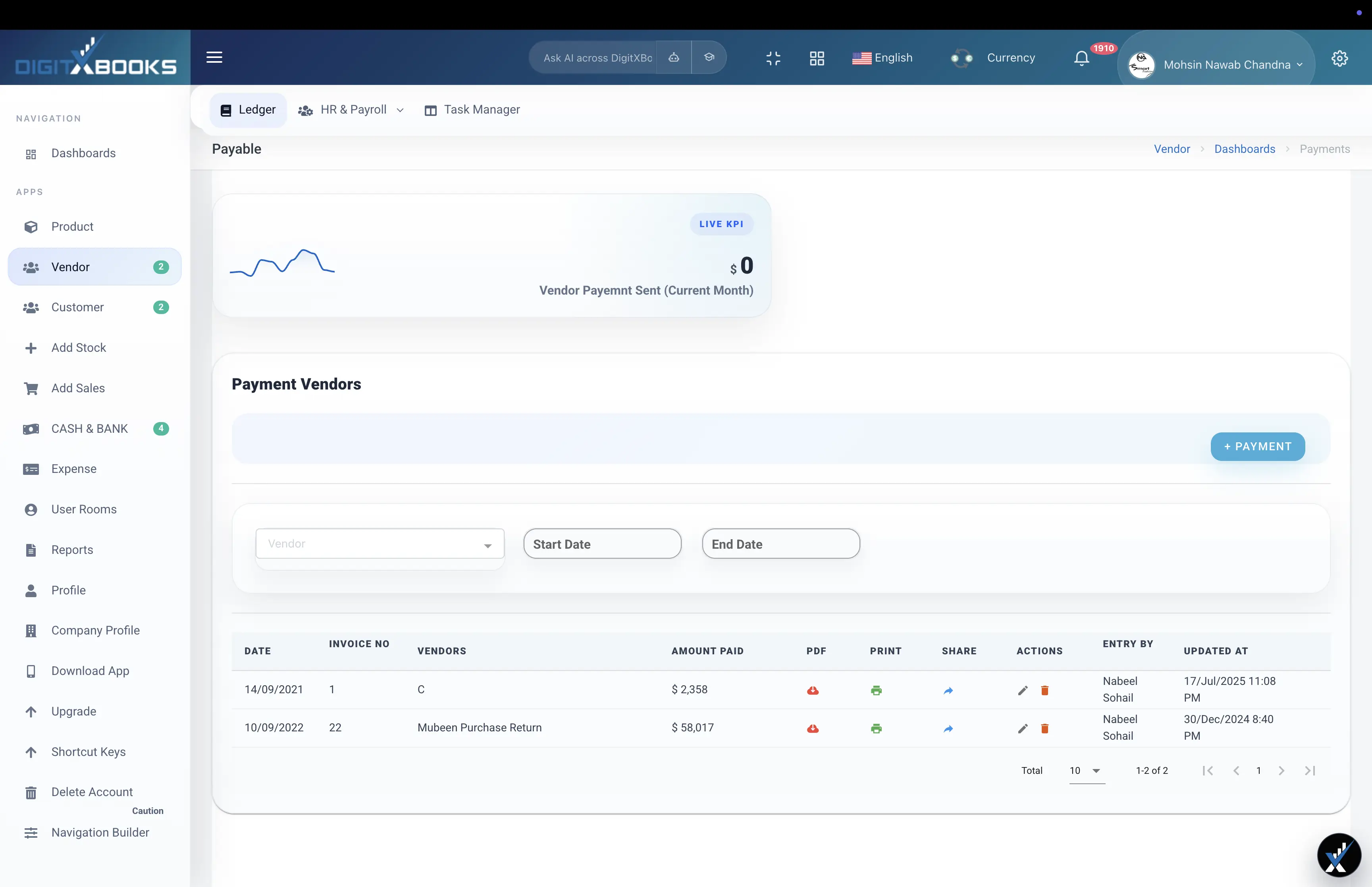
When raw material prices move, a standard cost set last year quietly turns a profitable product into a loss-maker. Purchase invoices with full line detail, vendor payable history and purchase-return tracking keep the actual input cost visible and give you evidence when renegotiating supply terms.
- Purchase invoices with product quantity, unit, price and amount
- Vendor payable balances and payment-out history
- Purchase returns and stock returns for rejected material
- Supplier purchase history for term negotiation
Stock through production
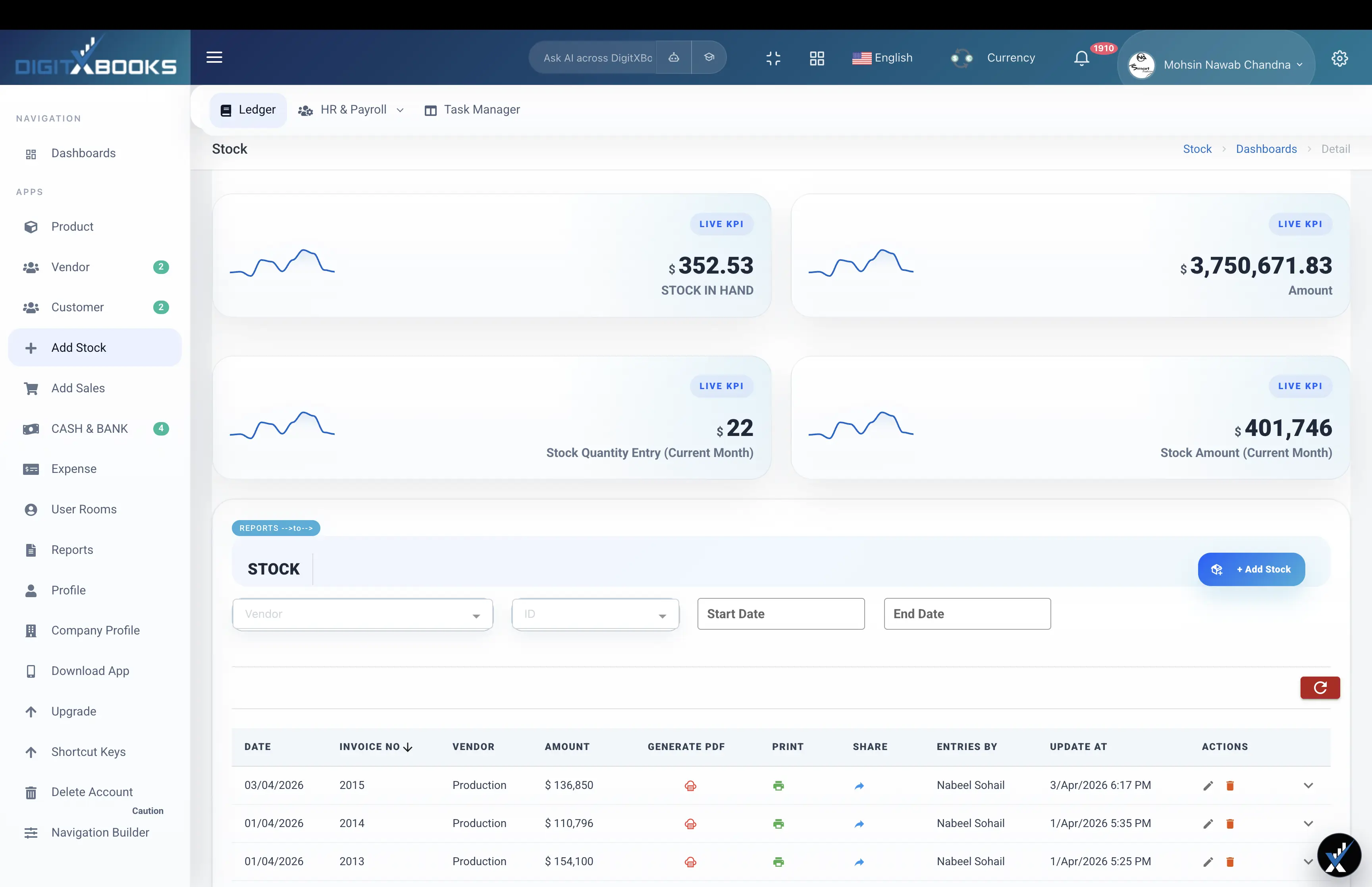
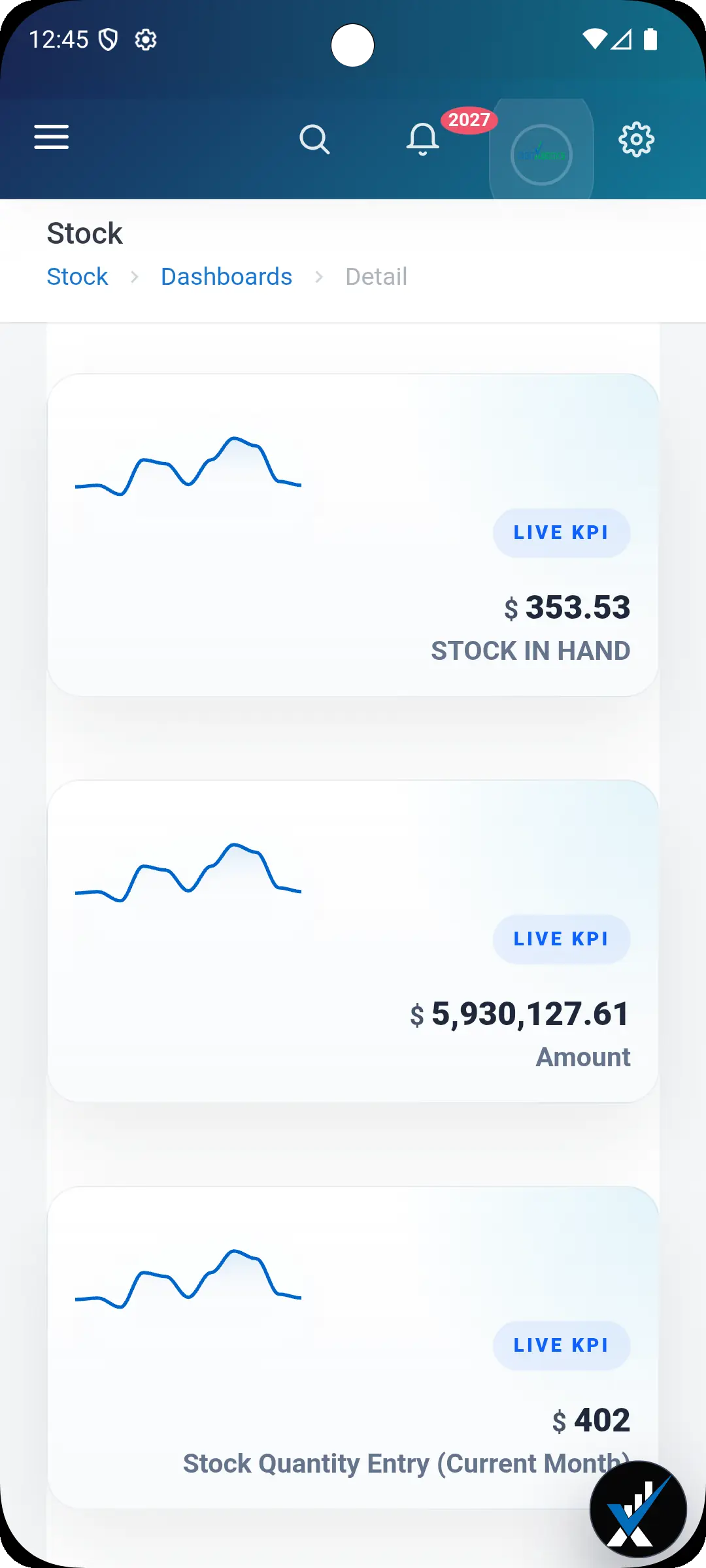
Material moving into production and finished goods coming out are both stock events, and both need recording to keep valuation honest. Stock additions, returns, product debit and credit adjustments and batch handling cover material issue, wastage and finished-goods receipt with an auditable trail.
- Stock additions and returns for material issue and receipt
- Product debit and credit adjustments for wastage and rework
- Batch handling for lot traceability and shelf life
- Product movement history for reconciling physical counts
Labour alongside materials
Labour is usually the second largest cost and is often tracked somewhere else entirely. Keeping departments, employees, payroll runs and payroll reports in the same platform as material cost means total production cost can be reviewed in one place.
- Departments, employees and payroll runs
- Monthly payroll records, salary slips and payroll reports
- Expense tracking for utilities, maintenance and overheads
- AI insights and what-if analysis on cost structure
An honest scope note
DigitXBooks covers costing, stock and financial control for manufacturing. It is not a full MRP system. If you need multi-level bills of materials with routings, work centres, capacity planning and shop-floor scheduling, you should evaluate a dedicated manufacturing platform, and this page would be doing you a disservice to suggest otherwise.
- Strong on material cost, stock valuation and margin
- No multi-level BOM routings or work-centre scheduling
- Best fit for assembly, light production and batch manufacturing
FAQs
Does DigitXBooks handle bills of materials?
Not as multi-level BOMs with routings and work centres. It handles product catalogues, stock movement through production, batch tracking and cost-versus-price margin, which fits assembly, light production and batch manufacturing. Complex multi-level manufacturing needs a dedicated MRP system.
Can I track raw material and finished goods separately?
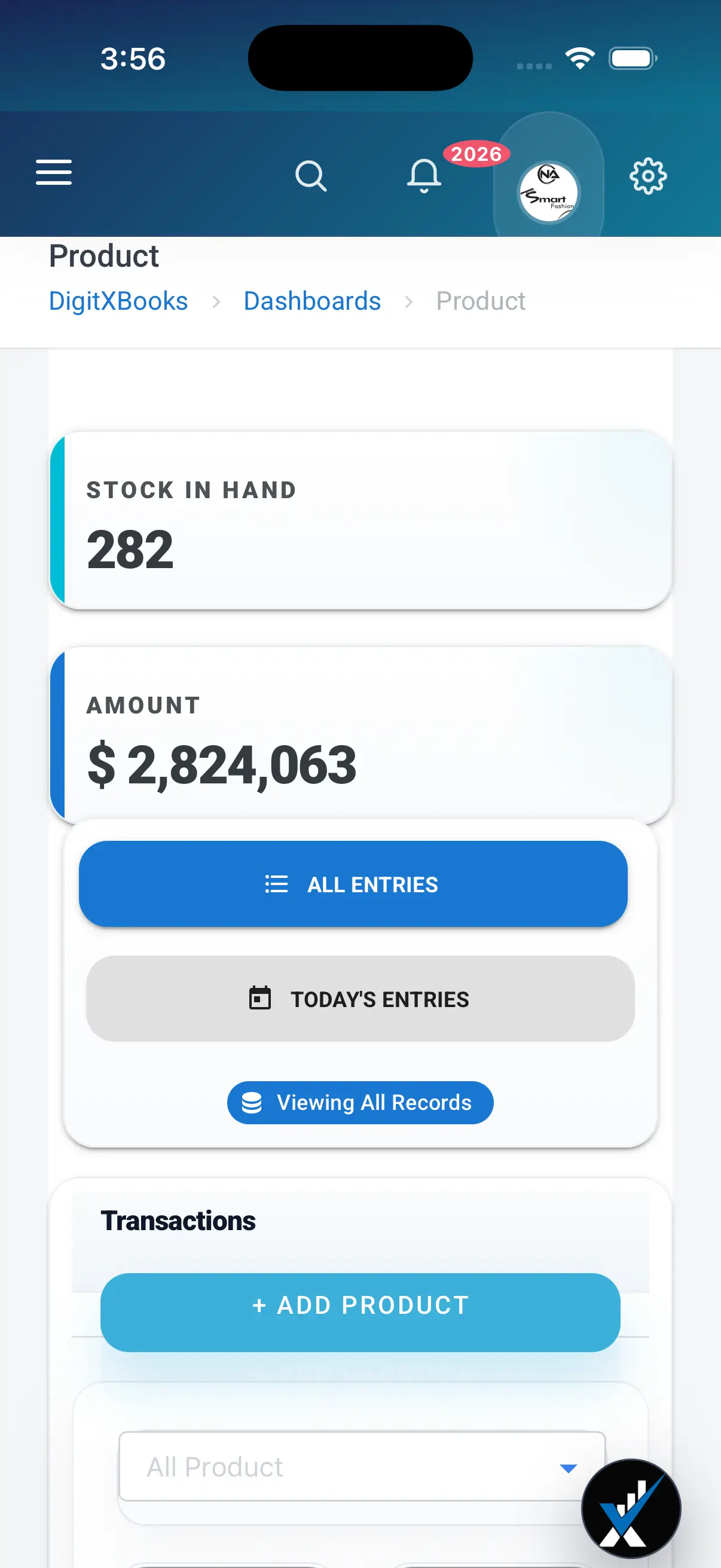
Yes. Both are products in the catalogue with their own stock positions and movement history, and stock additions, returns and adjustments record material issue, wastage and finished-goods receipt.
Does it include batch and lot traceability?
Yes. Batch handling supports lot traceability and shelf-life tracking, which matters for food, chemical and pharmaceutical production.
Can I see labour cost alongside material cost?
Yes. Departments, employees, payroll runs and payroll reports live in the same platform as purchasing and stock, so total production cost can be reviewed without exporting from two systems.