
Odoo Accounting Alternative
Odoo is genuinely powerful and its modularity is the point: with enough configuration it can be shaped into almost anything. That flexibility is also its cost. Apps have to be selected, configured and often customised, and many deployments end up depending on a partner or an in-house developer. DigitXBooks takes the opposite position. It is opinionated about how accounting, inventory, payroll and outreach fit together, so it works on day one without a configuration project.
Ready to use instead of ready to configure
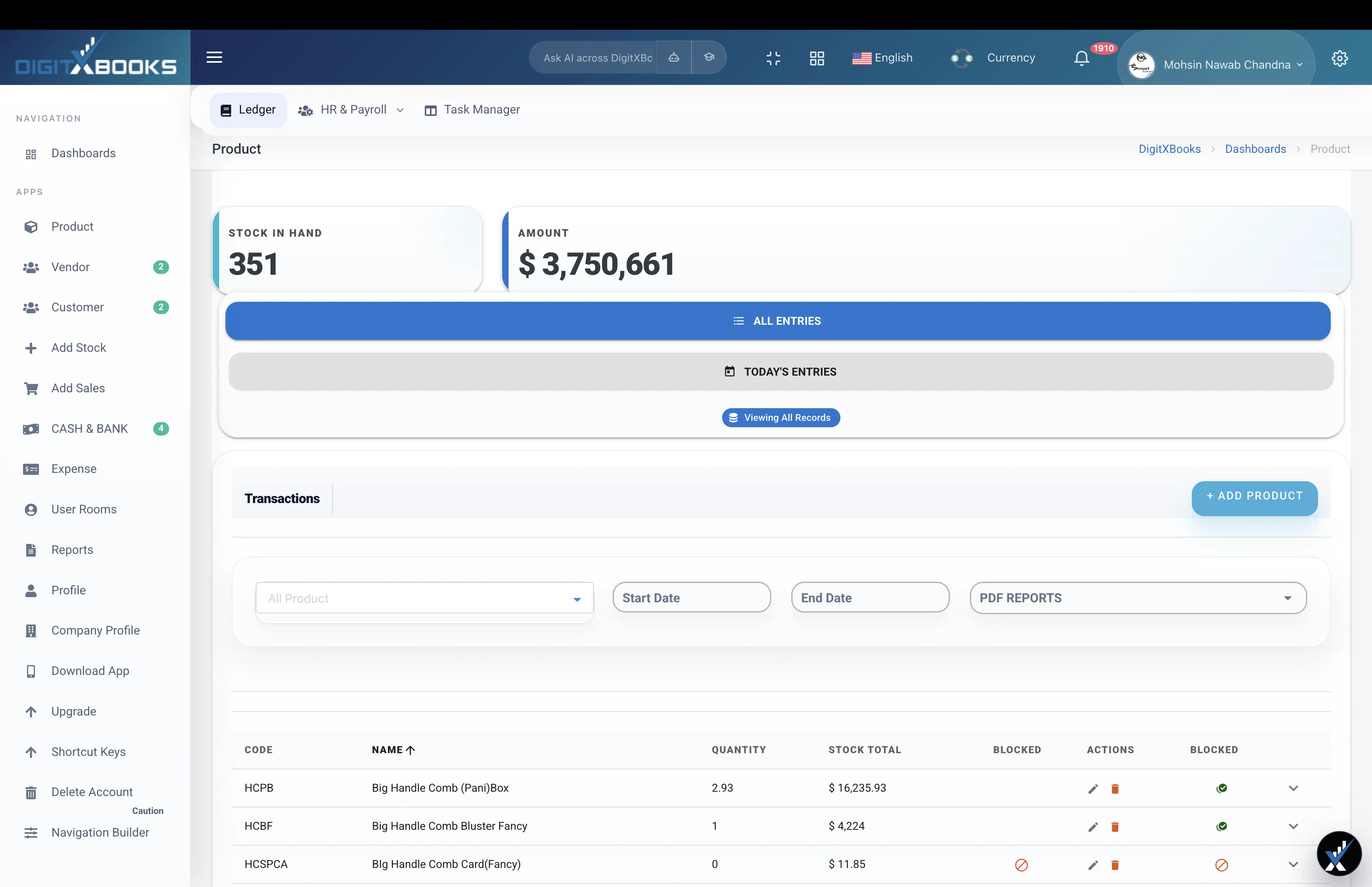
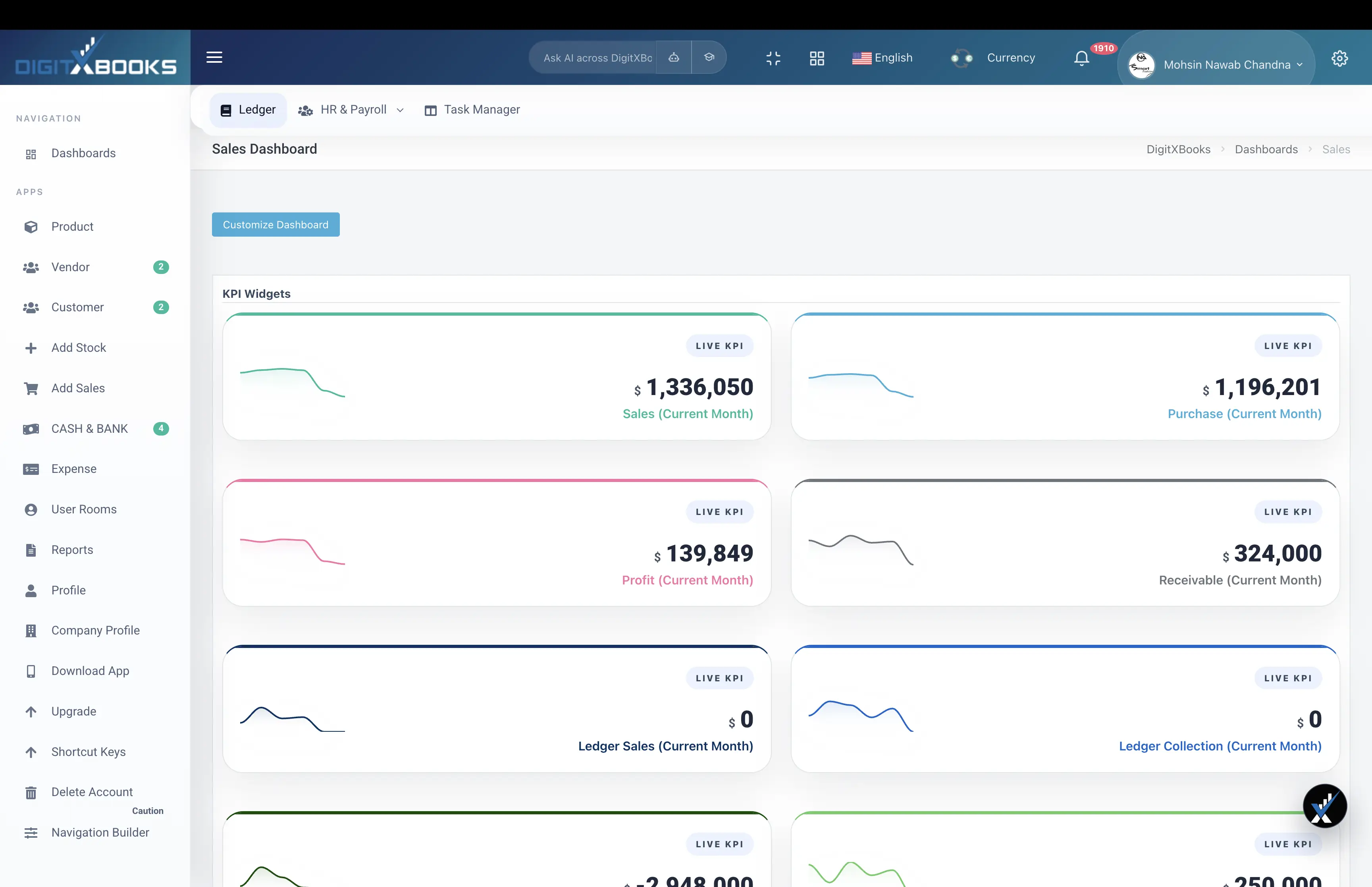
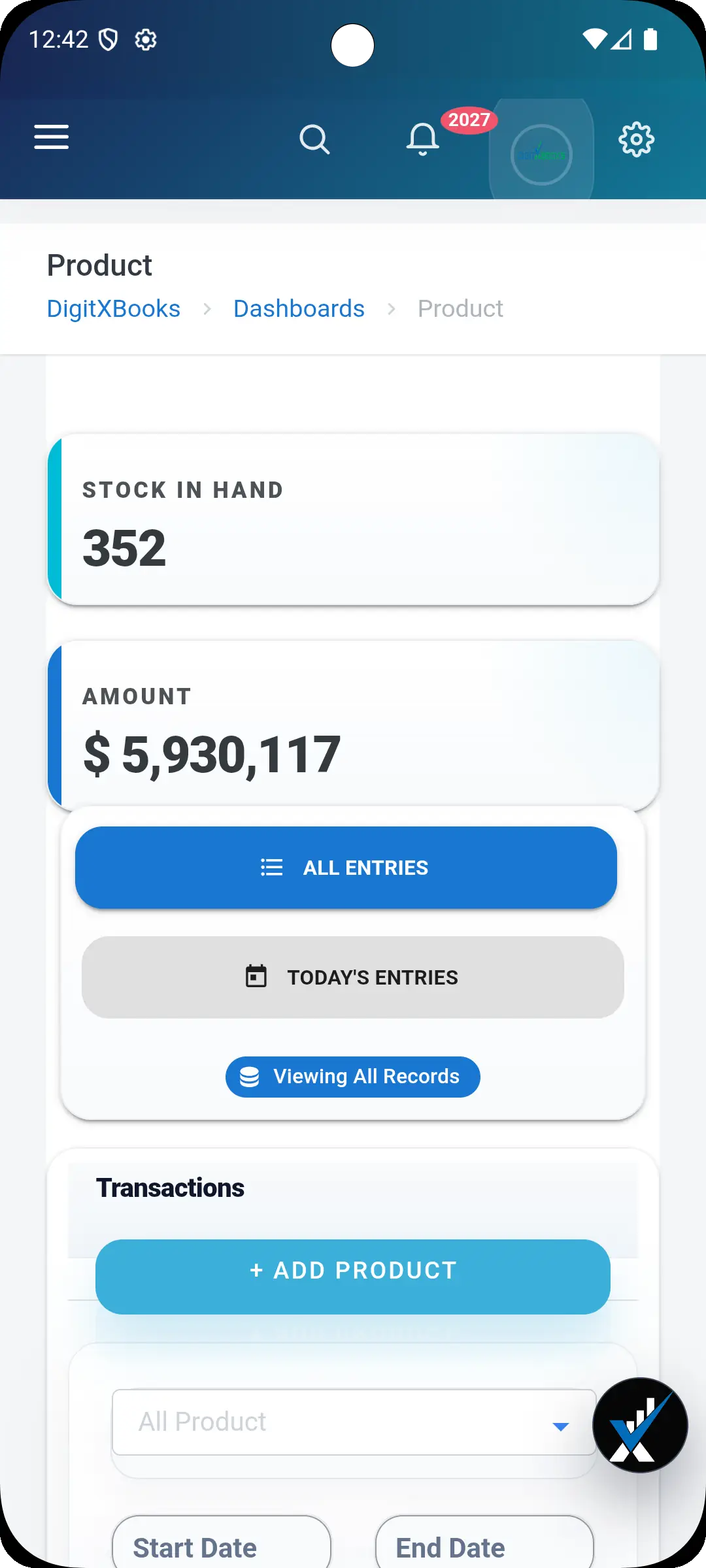
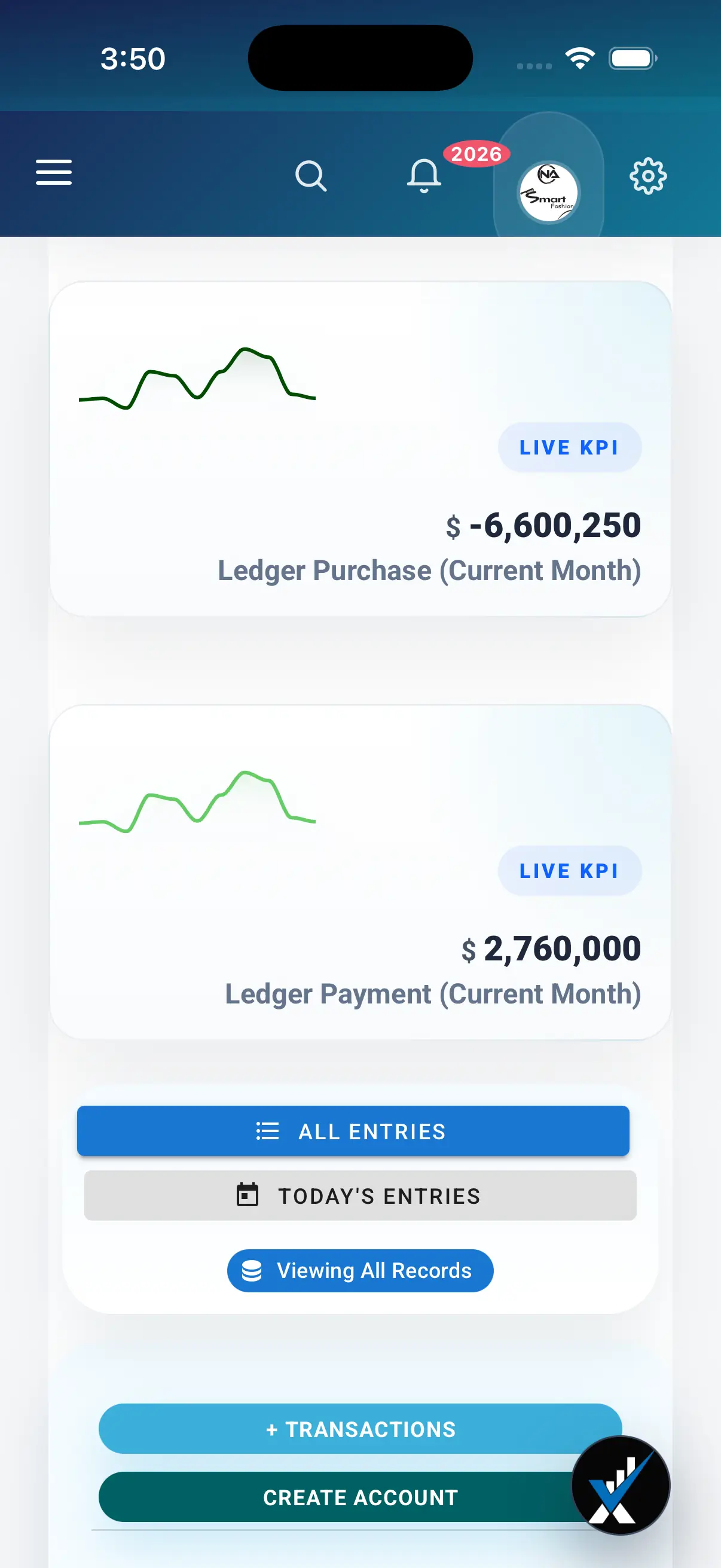
Configurable systems push the design work onto you. Someone has to decide how modules interact, what the fields mean and which workflow the team follows, and that person usually ends up being a paid specialist. DigitXBooks has already made those decisions along the grain of how product businesses actually operate: a sale moves stock, updates the receivable, touches cash or bank, and appears in the profit report.
- No module selection or dependency management
- Connected accounting, inventory, purchasing and payroll by default
- No developer needed for everyday changes
Total cost of ownership
The licence is rarely the real number with a modular ERP. Implementation, customisation, hosting, upgrade testing and partner retainers usually dominate, and upgrades get harder as customisation accumulates. A managed single-product subscription removes that whole category of spend, which is often the deciding factor for businesses under a hundred people.
- No implementation or customisation budget
- Managed hosting, updates and backups
- No upgrade-regression testing cycle
- 30-day trial with no card required
Where Odoo is the better choice
If your operation genuinely needs manufacturing routings, field service, a website builder and a point of sale all speaking to one another, or you have unusual processes that must be modelled exactly, Odoo's modularity and open-source extensibility are the right tool and a hosted single product will frustrate you.
- Very wide app ecosystem including manufacturing and field service
- Open-source extensibility for unusual processes
- Self-hosting option for strict data-residency requirements
DigitXBooks vs Odoo: how the two are packaged
| Capability | DigitXBooks | Odoo |
|---|---|---|
| Setup model | Works out of the box | Configure modules per deployment |
| Developer or partner needed | No | Commonly yes |
| Accounting, inventory, purchasing | Connected by default | Connected once configured |
| Payroll records | Included | Module and region-dependent |
| AI insights on your own data | Included | Not standard |
| AI email marketing and prospecting | Included | Separate apps or add-ons |
| Manufacturing depth | Basic | Strong |
| Self-hosting | Managed cloud only | Available |
| Upgrade effort | Managed | Grows with customisation |
| Interface languages | 6 (EN, ES, AR, FR, DE, ZH) | Many |
Need manufacturing routings, field service and a point of sale modelled to your exact process, with developers available? Odoo. Want accounting, stock, payroll and lead generation working properly tomorrow morning without a configuration project? DigitXBooks.
Competitor capabilities are summarised from their public product documentation and change frequently. Always confirm current details on the vendor's own site before deciding. The comparison below focuses on how each product is packaged rather than on pricing.
FAQs
Is DigitXBooks easier to set up than Odoo?
Substantially, because there is nothing to configure. There is no app selection, no module dependency management and no partner engagement. You create the company profile, import products, customers and vendors from CSV, set opening balances, and start transacting.
Does DigitXBooks support manufacturing like Odoo?
Only at a basic level. It handles product catalogues, stock movement, batch tracking and cost-versus-price margin, which covers assembly and light production. If you need multi-level bills of materials with routings and work centres, Odoo is genuinely the better fit.
Can I self-host DigitXBooks?
No. It is a managed cloud product, which is what removes the hosting, upgrade and backup burden. If strict data-residency rules require self-hosting, an open-source platform will suit you better.
What is the real cost difference?
Compare total cost of ownership rather than licences. A modular ERP typically adds implementation, customisation, hosting, upgrade testing and partner retainers on top of the licence. A managed single-product subscription removes those line items entirely.